The Man on the Eiffel Tower was made during what most describe as a bad time in Charles Laughton's career. The Siren says if this was Laughton's lowest ebb, he did much better than other fine actors with bumpy careers (see Richard Burton). This movie ultimately doesn't work, due largely to a novice director who made some bad choices. But it is a fascinating failure.
This was on another DVD in my Mystery 50-pack, and as I mentioned before, the print is atrocious, with poorly synchronized sound in the first reel, lousy sound overall, splices and washed-out color that fades in and out. It was shot using a process called "Ansco Color" that might have been interesting when it was released but now is sheer horror. The film has plenty of historical and artistic interest and absolutely deserves better treatment. Here's hoping someone cleans it up before releasing it to the world again.
The print quality detracts from what might otherwise be strong points. The Man on the Eiffel Tower was shot on location, and the look, feel and street noises of postwar Paris are incredible. (The city even gets its own credit line in the title sequence.) The movie also showcases the drop-dead designs of Robert Piguet, the Swiss-born couturier best remembered for launching the classic perfumes Fracas and Bandit under his name. Both those concoctions are notice-me-now-damnit scents, and judging by the costumes here that was Piguet's dress-design ethos as well. You would have to go back to Adrian's prewar glory days at MGM or Travis Banton at Paramount to find such extravagance. The gowns don't really suit the female characters' station in life, personalities or anything else, but they look so divine you don't care. Seeing these dresses through the fog of this awful print could drive a vintage-fashion lover batty.
I have read only one of George Simenon's Inspector Maigret books, and that was a long time ago. I don't think Laughton's characterization is especially true to the book. Simenon's Maigret is detached and methodical. Laughton's Maigret makes faces, makes mistakes, charges around in an excitable manner. It works perfectly well within the world of the movie, but I am not surprised that Simenon fans take a dim view of this adaptation. Laughton's rendition of Maigret's famous moustache is much fuller than the ratty little thing he sported in The Big Clock, thank goodness. One movie with that monstrosity was enough.
This thriller has a simple plot. Bill Kirby (Robert Hutton) is faced with a grasping mistress and a wife who won't go away for cheap (those ladies get the spectacular Piguet frocks). Kirby hires a medical student to dispatch his wealthy aunt. The medical student is played by a wonderfully psychotic Franchot Tone, who looks far more drawn and ill in this movie than he did as the dying President years later in Advise and Consent. Tone really gives the standout performance here, refraining from scenery-chewing but managing to convey Radek's suave, remorseless and intelligent personality as well as his barely hidden desire to be caught. The Siren found herself reflecting on Anthony Hopkins as Hannibal Lecter, and thinking how hammy the Brit seemed in comparison. The interplay between Laughton and Tone gives the movie its best scenes.
Alas, all of this good stuff is undone by Burgess Meredith, both as an actor and as a director. Meredith plays a student whom Radek tries to frame for the murder. His performance is a twitching mess of indication and obviousness, compounded by a shock of carroty hair that seems to be the only thing on the print that hasn't faded. Narrative coherence withers in many places and the viewer starts to get a touch of vertigo from all the disjointed, oddly placed and bizarre shots. By the time Meredith's character unaccountably joins in on the final chase across the titular landmark, the Siren was kind of hoping he would fall off so she could concentrate on Tone and Laughton once more.
The invaluable IMDB tells me Irving Allen was the original director of The Man on the Eiffel Tower, but was replaced by Meredith at Laughton's insistence. I cannot fathom why Laughton thought that would be a good idea. Maybe he wanted someone he could push around.
And Laughton directed Meredith's scenes, which are uniformly the worst in the movie. So let us reflect on that a moment. In 1949, Laughton was a demonstrably lousy director. In 1954 and 1955 Laughton screened D.W. Griffith's movies over and over again as he prepared to direct The Night of the Hunter. The Siren relishes yet more evidence backing up her belief that watching a great movie does more for us than we even dare hope.
Thứ Tư, 7 tháng 9, 2005

Thứ Sáu, 2 tháng 9, 2005

I won't be around much this weekend, although you never know. I don't want my weird Landmark weekend to be Top O' the Blog, so I am posting this marvelous picture of John Garfield. He was a fine actor and had a social conscience as well. He reminds me of good things about my country. His fate reminds me of the bad.
I was going to post a picture of Louis Armstrong, my favorite musician of all time, but it made me too damn sad, frankly. Like everybody else, I have been donating to the relief effort and trying not to put my foot through my television set in a fit of rage. Here is a fervent hope that the relief efforts improve in Mr. Armstrong's suffering city.

Thứ Ba, 30 tháng 8, 2005
How Orson Welles Saved the Siren
So remember when the Siren said she was taking some days off to untangle some things? She was being inauthentic with you. The reality was, she was taking the Landmark Forum. And now she is enrolled in a new realm of possibility. The possibility of realizing she went to a for-profit New Age outfit, knew it was a for-profit New Age outfit, spent the whole time realizing it and thinking, "wow, this is a for-profit New Age outfit," and still damn near got taken.
Several things saved her. There was her longtime suspicion of evangelical life-changing experiences. There was her background in business journalism, which means she knows corporations will try anything to separate you from your money. There was the influence of her late father, whose passion for the English language would have had him walking out of the room when the leader used a nonword such as "impactful" or "ongoingly" (each time the Siren heard that second one, she found herself hand-to-forehead as if to ward off a physical blow). There was her basic cussedness.
But what probably saved her, as much as anything else, was Orson Welles and Citizen Kane.
Settle in, folks. This will be a long post.
For some forty hours over the course of three days, the Siren was in a room with a bunch of total strangers and heard some things they probably haven't told even their best friends. She even got up to the microphone herself. She made a handful of nice and probably useful discoveries about herself. She is presently trying to incorporate some of those into her life. Which wasn't bad before she took the Forum, but needed some improvement in some areas. Once she gets her head screwed back on straight, she will continue to work on those areas.
But the Siren is also majorly, majorly pissed off. The Landmark Education Forum is run on a pyramid model. Think of it like the old shampoo commercial. "So I told two friends, and they told two friends, and so on, and so on ..." as the screen divides up into an infinite number of models with great hair. Only Landmark isn't selling shampoo. Landmark is selling "transformation." But (here's the beauty part) if you want transformation, you have to transform other people, who show up to your "graduation" with credit cards and also invest in transformation by signing up for the Landmark Forum (C$500 including sales tax). And they tell two friends with credit cards, and they tell two friends with checkbooks, and so on, and so on, until the screen is filled up with an infinite number of transformed people with smaller bank balances.
As an alumnus of the world of capitalist journalism, I have to admit it's one hell of a business model.
Back in New York City, I encountered some people who took this thing. More than I really wanted to encounter, to tell you the truth. The hard-core Forum acolytes spout a lot of stuff about how it will change your life. That is pretty much all they spout, which is why conversations with them tend to be dull. But they're thin on the details. They say you have to experience it to understand it.
I hope most of my patient audience will agree that you don't have to experience everything to understand it. Why else do we go to the movies? I have never experienced desperate poverty, but when I watch Pather Pachali I understand perfectly well that it is horrible. Let the Siren save you C$500 (I think it's about $350-$400 in the States). Here's the Forum, blow by blow.
You settle in with about 150 other transformation-seekers. You hear a lot of rules. The three sessions run from 9 a.m. to anywhere from 10 p.m. to midnight. You get two half-hour breaks and one ninety-minute meal break. Why does it take so long? According to your energetic Forum leader, because it does. Say hello to tautology, tell it to pull up a chair and get comfortable.
You get the dictionary definition of integrity, then you're told it's really about keeping your word ("being your word," in Forumspeak). You're told to be on time (okay, not a problem), not to take notes (some of this stuff looks mighty goofy written down, as the Siren's readers are about to discover), not to talk amongst yourselves (familiar from grade school, also has the advantage of stopping any "wow, that's mighty goofy" conversations).
So here's the talk.
1. All meaning is derived from language. Life is empty and meaningless.
2. Because all of life is meaningless, events have no intrinsic meaning. There is what happened (your mother beat you, your wife ran away with the mailman, your children haven't spoken to you since the Reagan administration). And there is your interpretation (your mother was an abusive cow, your wife was a slut, your children are ungrateful brats). People collapse the events with their meaning. We are meaning-making machines.
3. People deal with life by developing persistent complaints, or "rackets." Your racket reinforces your need to look good, your need to be right by making other people wrong. You are inauthentic with people. You don't tell them what's really happening.
4. If you can look at the events as simply events, you will be free of them. You call a new and powerful mode of existence into being. And you can enroll other people in those possibilities. You do it by getting them to hand over their money and go to the Forum.
Are you still awake? The Siren was nodding off, but pay attention. We've been told that meaning is derived from language. But have you noticed that Landmark is creating its own language? Landmark is a neologism-making machine. And you have to love the fact that they took the great word racket, meaning a dishonest business, and instead coupled it to the little things that drive you crazy about life. Landmark isn't a racket. Landmark is freeing you from rackets. Either you "got it," and understand the concept, or you are being "resistant."
So that's the gist. It gets repeated over and over again, until your ass is numb and your mind is reeling. There's some other stuff, like an exercise in which you are supposed to close your eyes and be afraid, of the person sitting next to you, of everybody in the room, of everybody in Toronto, then everybody in Canada. This did nothing for the Siren because try as she might, she couldn't see anything frightening about Canadians.
Anyway. During the Forum, you are encouraged to call people that you are "incomplete with," Landmarkspeak for "pissed off at" or "have wronged." You're encouraged to tell them you have been inauthentic, and "share the possibility" that you could create a new phase in your relationship.
Why, that's sweet, isn't it? How is that sinister? It isn't. Except, that isn't the whole story.
When you call, you're also supposed to share the Forum experience. And later on you're supposed to share it with bloody everybody you've ever met.
The interesting part of the Forum doesn't come from listening to your leader yack. The interest comes from seeing people get up and "share" about their lives. And pretty awful some of them are, too. It's amazing how much suffering one room can contain. And, the leader told us Sunday night, look at it now! It's gone! isn't that amazing? How do we know it's gone?
Because we say it's gone. It was just a story. Your interpretation of events.
Got that? The Siren almost got it. She was sitting there Sunday afternoon, actually wondering if she should go to the "graduation," though the real purpose of the evening is to bring others to sign up for the Forum and maybe sign up for more Landmark stuff yourself, at steadily increasing prices.
Then the leader brought up Citizen Kane.
How many people had seen Citizen Kane, he asked. A gratifying number of hands were raised (the Siren was worried about that). He proceeded to summarize the movie. The opening death scene, Kane uttering the single word "Rosebud," the globe falling from his hand and shattering. The arc of Kane's life, as he goes from lonely little boy to newspaper magnate endlessly acquiring things and objects. The magnitude of Kane's failure. Then, the great shot where the camera zooms in and reveals the sled Kane had ridden long ago, the one he threw at the man who came to take him away to school. The camera lingering as the fire in the furnace consumes the sled. The leader said, here the audience realizes that Kane had spent his entire life trying to recapture a moment from his childhood. Kane's life had been empty and meaningless, the leader said.
Okay. Welles himself described Charles Foster Kane as "a hollow man." But the Siren snapped to attention and said to herself, wait a minute.
Citizen Kane is a tragedy at its core, meant to evoke pity and terror. The Landmark Forum certainly can cause terror, although that works better in Toronto if you're scared of Canadians. But there's no pity. What happened to you, to anyone, is a story. The Forum leader would have looked at Kane, after the wrenching scene where he trashes Susan's room, and said, "She left you. That's what happened. Your rage and pain is just a story. It doesn't mean anything. The meaning is just what you attach to it." All the feeling, all the compassion the movie has for its characters, is impossible in a Forum-ized world.
And there's more.
Yes, after this scene the audience finds out what Rosebud means. But the reporter Thompson is still right. You can't reduce the mystery, poignance and failure of Charles Foster Kane to one word. Kane wasn't all about getting back to Rosebud. There was a great deal more to him, more than anyone could ever know. The complexities of human beings can't be reduced to one word. They can't be reduced to a bunch of "powerful" "possibilities" and jargon, either.
So the Forum leader viewed one of the pinnacles of American art, and missed the whole goddamned point.
And the Siren said, there's no way I am going to my "graduation."
Last night, I spoke to a dear friend as I tried to decompress from the whole Landmark experience. I told him that one of the most outrageous aspects of Landmark, to me, was the presence of volunteers at the Forum. Volunteers? At a for-profit company? I told my friend that I liked some of Ang Lee's movies, but that doesn't mean I am going to go down to his set and volunteer to do stuff like hold the door open.
My pal chuckled. "But you'd hold the door open for Welles," he said.
"After this weekend," I replied, "you bet I would."
Several things saved her. There was her longtime suspicion of evangelical life-changing experiences. There was her background in business journalism, which means she knows corporations will try anything to separate you from your money. There was the influence of her late father, whose passion for the English language would have had him walking out of the room when the leader used a nonword such as "impactful" or "ongoingly" (each time the Siren heard that second one, she found herself hand-to-forehead as if to ward off a physical blow). There was her basic cussedness.
But what probably saved her, as much as anything else, was Orson Welles and Citizen Kane.
Settle in, folks. This will be a long post.
For some forty hours over the course of three days, the Siren was in a room with a bunch of total strangers and heard some things they probably haven't told even their best friends. She even got up to the microphone herself. She made a handful of nice and probably useful discoveries about herself. She is presently trying to incorporate some of those into her life. Which wasn't bad before she took the Forum, but needed some improvement in some areas. Once she gets her head screwed back on straight, she will continue to work on those areas.
But the Siren is also majorly, majorly pissed off. The Landmark Education Forum is run on a pyramid model. Think of it like the old shampoo commercial. "So I told two friends, and they told two friends, and so on, and so on ..." as the screen divides up into an infinite number of models with great hair. Only Landmark isn't selling shampoo. Landmark is selling "transformation." But (here's the beauty part) if you want transformation, you have to transform other people, who show up to your "graduation" with credit cards and also invest in transformation by signing up for the Landmark Forum (C$500 including sales tax). And they tell two friends with credit cards, and they tell two friends with checkbooks, and so on, and so on, until the screen is filled up with an infinite number of transformed people with smaller bank balances.
As an alumnus of the world of capitalist journalism, I have to admit it's one hell of a business model.
Back in New York City, I encountered some people who took this thing. More than I really wanted to encounter, to tell you the truth. The hard-core Forum acolytes spout a lot of stuff about how it will change your life. That is pretty much all they spout, which is why conversations with them tend to be dull. But they're thin on the details. They say you have to experience it to understand it.
I hope most of my patient audience will agree that you don't have to experience everything to understand it. Why else do we go to the movies? I have never experienced desperate poverty, but when I watch Pather Pachali I understand perfectly well that it is horrible. Let the Siren save you C$500 (I think it's about $350-$400 in the States). Here's the Forum, blow by blow.
You settle in with about 150 other transformation-seekers. You hear a lot of rules. The three sessions run from 9 a.m. to anywhere from 10 p.m. to midnight. You get two half-hour breaks and one ninety-minute meal break. Why does it take so long? According to your energetic Forum leader, because it does. Say hello to tautology, tell it to pull up a chair and get comfortable.
You get the dictionary definition of integrity, then you're told it's really about keeping your word ("being your word," in Forumspeak). You're told to be on time (okay, not a problem), not to take notes (some of this stuff looks mighty goofy written down, as the Siren's readers are about to discover), not to talk amongst yourselves (familiar from grade school, also has the advantage of stopping any "wow, that's mighty goofy" conversations).
So here's the talk.
1. All meaning is derived from language. Life is empty and meaningless.
2. Because all of life is meaningless, events have no intrinsic meaning. There is what happened (your mother beat you, your wife ran away with the mailman, your children haven't spoken to you since the Reagan administration). And there is your interpretation (your mother was an abusive cow, your wife was a slut, your children are ungrateful brats). People collapse the events with their meaning. We are meaning-making machines.
3. People deal with life by developing persistent complaints, or "rackets." Your racket reinforces your need to look good, your need to be right by making other people wrong. You are inauthentic with people. You don't tell them what's really happening.
4. If you can look at the events as simply events, you will be free of them. You call a new and powerful mode of existence into being. And you can enroll other people in those possibilities. You do it by getting them to hand over their money and go to the Forum.
Are you still awake? The Siren was nodding off, but pay attention. We've been told that meaning is derived from language. But have you noticed that Landmark is creating its own language? Landmark is a neologism-making machine. And you have to love the fact that they took the great word racket, meaning a dishonest business, and instead coupled it to the little things that drive you crazy about life. Landmark isn't a racket. Landmark is freeing you from rackets. Either you "got it," and understand the concept, or you are being "resistant."
So that's the gist. It gets repeated over and over again, until your ass is numb and your mind is reeling. There's some other stuff, like an exercise in which you are supposed to close your eyes and be afraid, of the person sitting next to you, of everybody in the room, of everybody in Toronto, then everybody in Canada. This did nothing for the Siren because try as she might, she couldn't see anything frightening about Canadians.
Anyway. During the Forum, you are encouraged to call people that you are "incomplete with," Landmarkspeak for "pissed off at" or "have wronged." You're encouraged to tell them you have been inauthentic, and "share the possibility" that you could create a new phase in your relationship.
Why, that's sweet, isn't it? How is that sinister? It isn't. Except, that isn't the whole story.
When you call, you're also supposed to share the Forum experience. And later on you're supposed to share it with bloody everybody you've ever met.
The interesting part of the Forum doesn't come from listening to your leader yack. The interest comes from seeing people get up and "share" about their lives. And pretty awful some of them are, too. It's amazing how much suffering one room can contain. And, the leader told us Sunday night, look at it now! It's gone! isn't that amazing? How do we know it's gone?
Because we say it's gone. It was just a story. Your interpretation of events.
Got that? The Siren almost got it. She was sitting there Sunday afternoon, actually wondering if she should go to the "graduation," though the real purpose of the evening is to bring others to sign up for the Forum and maybe sign up for more Landmark stuff yourself, at steadily increasing prices.
Then the leader brought up Citizen Kane.
How many people had seen Citizen Kane, he asked. A gratifying number of hands were raised (the Siren was worried about that). He proceeded to summarize the movie. The opening death scene, Kane uttering the single word "Rosebud," the globe falling from his hand and shattering. The arc of Kane's life, as he goes from lonely little boy to newspaper magnate endlessly acquiring things and objects. The magnitude of Kane's failure. Then, the great shot where the camera zooms in and reveals the sled Kane had ridden long ago, the one he threw at the man who came to take him away to school. The camera lingering as the fire in the furnace consumes the sled. The leader said, here the audience realizes that Kane had spent his entire life trying to recapture a moment from his childhood. Kane's life had been empty and meaningless, the leader said.
Okay. Welles himself described Charles Foster Kane as "a hollow man." But the Siren snapped to attention and said to herself, wait a minute.
Citizen Kane is a tragedy at its core, meant to evoke pity and terror. The Landmark Forum certainly can cause terror, although that works better in Toronto if you're scared of Canadians. But there's no pity. What happened to you, to anyone, is a story. The Forum leader would have looked at Kane, after the wrenching scene where he trashes Susan's room, and said, "She left you. That's what happened. Your rage and pain is just a story. It doesn't mean anything. The meaning is just what you attach to it." All the feeling, all the compassion the movie has for its characters, is impossible in a Forum-ized world.
And there's more.
Female reporter: If you could've found out what Rosebud meant, I bet that would've explained everything.
Thompson: No, I don't think so. No. Mr. Kane was a man who got everything he wanted and then lost it. Maybe Rosebud was something he couldn't get, or something he lost. Anyway, it wouldn't have explained anything. I don't think any word can explain a man's life. No, I guess Rosebud is just a piece in a jigsaw puzzle. A missing piece.
Yes, after this scene the audience finds out what Rosebud means. But the reporter Thompson is still right. You can't reduce the mystery, poignance and failure of Charles Foster Kane to one word. Kane wasn't all about getting back to Rosebud. There was a great deal more to him, more than anyone could ever know. The complexities of human beings can't be reduced to one word. They can't be reduced to a bunch of "powerful" "possibilities" and jargon, either.
So the Forum leader viewed one of the pinnacles of American art, and missed the whole goddamned point.
And the Siren said, there's no way I am going to my "graduation."
Last night, I spoke to a dear friend as I tried to decompress from the whole Landmark experience. I told him that one of the most outrageous aspects of Landmark, to me, was the presence of volunteers at the Forum. Volunteers? At a for-profit company? I told my friend that I liked some of Ang Lee's movies, but that doesn't mean I am going to go down to his set and volunteer to do stuff like hold the door open.
My pal chuckled. "But you'd hold the door open for Welles," he said.
"After this weekend," I replied, "you bet I would."
Thứ Năm, 25 tháng 8, 2005
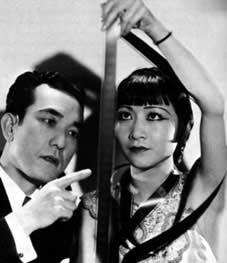
The Siren will be untangling some matters this weekend and will probably be online very little until Monday. While she's gone, why not Make Your Own Dolph Lundgren Movie?
Thứ Ba, 23 tháng 8, 2005
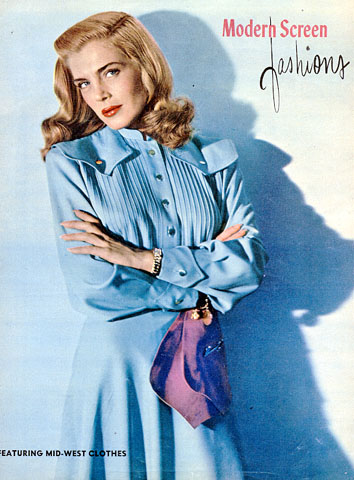
Murder at Midnight (1931) and Too Late for Tears (1949)
Still trying to recreate Turner Classic Movies, Siren got something called the Mystery DVD Pack (about $32 including shipping and handling), 50 movies of wildly varying quality on 12 double-sided DVDs. When she's bored or wants a hour's relaxation she's been watching an old B movie or noir. Murder at Midnight (1931) is a lumbering relic of a film that's interesting mainly to show how fast acting technique evolved in the early '30s. But it does illustrate an unusual police interrogation technique. One cop is eating peanuts, cracking them and scattering the shells on the floor. "Will you STOP eating those things! Stop it, I tell you!" the suspect yells. "He'll stop eating them," another officer says grimly, "when you start talking."
I had better luck with Too Late for Tears (1949) (a.k.a. Killer Bait), directed by Byron Haskin and starring Lizabeth Scott, Dan Duryea and Arthur Kennedy. Scott plays Jane, an average housewife--average, that is, for about one-half of the first scene. Then someone tosses a satchel full of cash into the backseat of the convertible she's riding in with husband Alan (Kennedy). The second they open the case, Jane's sole aim in life becomes hanging onto that money.
Like most film noir femmes, Jane doesn't suddenly go to the bad. You find out fast that she always was bad, just putting on a good act with nebbishy, middle-class Alan, who knows why. Alan warns Jane that the money has an owner who'll be coming back to collect. Sure enough, here comes Dan Duryea, in full-dress bad guy mode, wanting his money. But Jane's sex appeal is a little too much for him. Instead of just beating her until she squawks, he gives her a chance ... and another, and another. Yep, he's hooked.
I liked the snappy plot in which nearly all of the characters have more going on than it seems, even fuddy-duddy Alan. I also liked the dazzlingly pretty Kristine Miller, who's interesting despite playing Alan's nice-girl sister. (Her career seems not to have amounted to much, which is a pity.) The performances are good right down to the minor characters, and the script has wit enough to compensate for gaps in logic.
Too Late for Tears doesn't have the intensity or complex themes of a top-notch noir like The Strange Love of Martha Ivers, which had made Scott a star three years earlier. And then there's the lackluster, cut-rate look of the thing, despite top-notch cinematographer William C. Mellor. Every room looks like a floor model from a furniture store, right up to the motel room where Duryea hangs his fedora. And the movie also shows why costumes matter. Even when she's supposedly spending the cash, poor Lizabeth has to vamp it up in some of the frumpiest, most ill-fitting ensembles imaginable. Outdated too; you'd never know this movie was filmed two years after Dior's New Look hit the scene. Whoever heard of a femme fatale with such lousy taste? Even trampy Phyllis Dietrichson had a better wardrobe.
A word about this Mystery DVD Pack. The print quality ranges from appalling to adequate. I spent much of the late 1980s watching movies at Theatre 80 St. Marks, where the prints were church-basement-movie-night quality. So I can overlook some glitches, the same way I don't mind the hiss and pops on an old sound recording. Too Late for Tears doesn't look awful in this version, but has a lot of splices that annoyed even me. (So far the worst was The Man on the Eiffel Tower, a DVD transfer from a print so bad I'm unsure whether to discuss it here, since in some sense I can't be said to have seen it. I probably will write it up anyway, as part of my Charles Laughton series.) Anyway, the per-movie price boils down to about 64 cents a movie, so you can decide if that's worth the so-so prints.
I had better luck with Too Late for Tears (1949) (a.k.a. Killer Bait), directed by Byron Haskin and starring Lizabeth Scott, Dan Duryea and Arthur Kennedy. Scott plays Jane, an average housewife--average, that is, for about one-half of the first scene. Then someone tosses a satchel full of cash into the backseat of the convertible she's riding in with husband Alan (Kennedy). The second they open the case, Jane's sole aim in life becomes hanging onto that money.
Like most film noir femmes, Jane doesn't suddenly go to the bad. You find out fast that she always was bad, just putting on a good act with nebbishy, middle-class Alan, who knows why. Alan warns Jane that the money has an owner who'll be coming back to collect. Sure enough, here comes Dan Duryea, in full-dress bad guy mode, wanting his money. But Jane's sex appeal is a little too much for him. Instead of just beating her until she squawks, he gives her a chance ... and another, and another. Yep, he's hooked.
I liked the snappy plot in which nearly all of the characters have more going on than it seems, even fuddy-duddy Alan. I also liked the dazzlingly pretty Kristine Miller, who's interesting despite playing Alan's nice-girl sister. (Her career seems not to have amounted to much, which is a pity.) The performances are good right down to the minor characters, and the script has wit enough to compensate for gaps in logic.
Too Late for Tears doesn't have the intensity or complex themes of a top-notch noir like The Strange Love of Martha Ivers, which had made Scott a star three years earlier. And then there's the lackluster, cut-rate look of the thing, despite top-notch cinematographer William C. Mellor. Every room looks like a floor model from a furniture store, right up to the motel room where Duryea hangs his fedora. And the movie also shows why costumes matter. Even when she's supposedly spending the cash, poor Lizabeth has to vamp it up in some of the frumpiest, most ill-fitting ensembles imaginable. Outdated too; you'd never know this movie was filmed two years after Dior's New Look hit the scene. Whoever heard of a femme fatale with such lousy taste? Even trampy Phyllis Dietrichson had a better wardrobe.

A word about this Mystery DVD Pack. The print quality ranges from appalling to adequate. I spent much of the late 1980s watching movies at Theatre 80 St. Marks, where the prints were church-basement-movie-night quality. So I can overlook some glitches, the same way I don't mind the hiss and pops on an old sound recording. Too Late for Tears doesn't look awful in this version, but has a lot of splices that annoyed even me. (So far the worst was The Man on the Eiffel Tower, a DVD transfer from a print so bad I'm unsure whether to discuss it here, since in some sense I can't be said to have seen it. I probably will write it up anyway, as part of my Charles Laughton series.) Anyway, the per-movie price boils down to about 64 cents a movie, so you can decide if that's worth the so-so prints.
Chủ Nhật, 21 tháng 8, 2005
Walk This Way
Looker has a post that nicely evokes the crushing, poignant moment when you realize the movie you are watching wasn't worth the effort it took to get to the theater. At this point, the question becomes: To walk, or not to walk?
The Siren almost never walks, which may prove she's an optimist after all. Or it may prove she's an indolent little thing at heart. Maybe both. It definitely proves I'm stingy with film dollars and plan carefully before I go to the cineplex. I can recall only three movies I ever walked out on. All of them were in the days when I'd see four or five movies a week, and so could afford to view a few stinkers.
The Moon in the Gutter. The music swelled, and for the third time, Nastassia Kinski turned around with one tear rolling down her face. The Siren said to her companion, "I don't have time for this," and went out into the East Village night to grab a drink, a decision she's never regretted.
Once Upon a Time in America. The Siren knows there are many cinephiles who admire this one. Well, I did not like it, Sam I am. Here's the point where I walked: Robert DeNiro rapes the girl of his dreams, Elizabeth McGovern, in the back of his limo after a party. He gets out of the limo, the chaffeur drives McGovern home, he's alone on the beach, the violins sigh ... and I realized that Sergio Leone wanted me to feel sorry for this guy.
Rather than comply, I left.
(Years later some people tried to tell me that I had seen the first-release butchered version, and really I needed to see the uncut version. So instead of 140 minutes of linear structure, misogyny and straining for the The Godfather's profundity, I'd get 226 minutes of flashbacks, misogyny and straining for The Godfather's profundity. I think I was better off the first time.)
One of the Nightmare on Elm Street movies. My tenderhearted, well-mannered roommate had an unaccountable love for slasher movies and I went thinking it would be some kind of a campy diversion. I have blanked out whatever it was that made me leave, but I told him I was going home and I did. After that we stuck to attending the middle-to-highbrow stuff together and he took dates to the slasher movies.
That's it, near as I can remember. I don't think the time I stomped out of the living room while some relatives were watching Jackass counts. (God I hated that movie. It wasn't enough that I wasn't watching. The idea that anyone, anywhere, let alone in the same house, was watching it was well-nigh unbearable to me.) It's certainly much easier to turn off a DVD player than to walk out of a movie. There are a few I wish I had walked out on, including Broken Arrow and Baise-Moi.
So the Siren asks her patient audience: ever walked out on a film? what was it? Anything you should have walked out on, but didn't?
The Siren almost never walks, which may prove she's an optimist after all. Or it may prove she's an indolent little thing at heart. Maybe both. It definitely proves I'm stingy with film dollars and plan carefully before I go to the cineplex. I can recall only three movies I ever walked out on. All of them were in the days when I'd see four or five movies a week, and so could afford to view a few stinkers.
The Moon in the Gutter. The music swelled, and for the third time, Nastassia Kinski turned around with one tear rolling down her face. The Siren said to her companion, "I don't have time for this," and went out into the East Village night to grab a drink, a decision she's never regretted.
Once Upon a Time in America. The Siren knows there are many cinephiles who admire this one. Well, I did not like it, Sam I am. Here's the point where I walked: Robert DeNiro rapes the girl of his dreams, Elizabeth McGovern, in the back of his limo after a party. He gets out of the limo, the chaffeur drives McGovern home, he's alone on the beach, the violins sigh ... and I realized that Sergio Leone wanted me to feel sorry for this guy.
Rather than comply, I left.
(Years later some people tried to tell me that I had seen the first-release butchered version, and really I needed to see the uncut version. So instead of 140 minutes of linear structure, misogyny and straining for the The Godfather's profundity, I'd get 226 minutes of flashbacks, misogyny and straining for The Godfather's profundity. I think I was better off the first time.)
One of the Nightmare on Elm Street movies. My tenderhearted, well-mannered roommate had an unaccountable love for slasher movies and I went thinking it would be some kind of a campy diversion. I have blanked out whatever it was that made me leave, but I told him I was going home and I did. After that we stuck to attending the middle-to-highbrow stuff together and he took dates to the slasher movies.
That's it, near as I can remember. I don't think the time I stomped out of the living room while some relatives were watching Jackass counts. (God I hated that movie. It wasn't enough that I wasn't watching. The idea that anyone, anywhere, let alone in the same house, was watching it was well-nigh unbearable to me.) It's certainly much easier to turn off a DVD player than to walk out of a movie. There are a few I wish I had walked out on, including Broken Arrow and Baise-Moi.
So the Siren asks her patient audience: ever walked out on a film? what was it? Anything you should have walked out on, but didn't?
Đăng ký:
Bài đăng (Atom)