The Siren indulged in a bit of comfort movie viewing over the weekend as she fought off a terrifying Ragweed Pollen Invasion. In this case, the movie was Michelangelo Antonioni's Blowup (1966).
Unfortunately, her initial comfort evaporated soon after seeing her new DVD.
The Siren just never tires of the look of this movie. The fashions, the glimpses of London, the way the main character's studio/flat is decorated; it all looks great, still. Time hasn't been entirely kind to this film, once the coolest of art flicks. The Siren thinks the main problem is that a lot of its devices have been recycled so often by lesser filmmakers that they make even this, the original, seem stale. But there are many reasons to see Blowup, aside from its place in history. There's the cast, an amazing eyeful of what made Sixties London swing. Feast your eyes on Verushka, Vanessa Redgrave, Sarah Miles, Jane Birkin and, most of all, then-gorgeous David Hemmings. He is in almost every scene, and the Siren readily admits that for her, he's a big part of the film's appeal.
The famous scenes hold up very well--from Hemmings photographing a writhing Verushka, then collapsing after the session climaxes, to Redgrave trying to seduce her way into getting the roll of film, to the series of scenes from which the movie gets its name.
Maybe it no longer seems revolutionary. But here in 2005, every other TV show is a makeover program, and magazines are stuffed with photos of celebrities whose looks we scrutinize in minutest detail. And here from 1966 is a movie with a dazzling surface, that still insists on telling the audience that surfaces are just that.
It was wonderful to curl up on the couch and get re-acquainted with this one. The Siren saw it about 20 years ago, at the Thalia, if memory serves. She rented it on VHS a couple of times subsequently. Ah, the pleasures of a DVD. Crisp picture, glorious color, good sound in the club scene. (Jimmy Page looked awfully handsome in his Yardbirds days, didn't he?)
But something was nagging at the Siren. She was embarrassed to admit it. It seemed rather gauche to be actually looking for them. But hey ...
She could have sworn she saw Vanessa Redgrave's breasts the first time she viewed Blowup. And Jane Birkin full-frontal in that so-called orgy scene, too.
Gosh, guess that's another aspect of the movie's greatness, huh? Antonioni, like Hitchcock with Psycho, makes you think you saw bits where there weren't any bits to be seen. The Siren shut off the player, went off to browse film sites and IMDB before writing up her impressions. And she followed one link, and then another, until she came across this.
Which made her madder than Bette Davis at a Joan Crawford tribute.
What the hell?
No, excuse me, let me rephrase that.
What the FUCKING hell is going on here?
This film, a landmark by any meaningful definition of the term, got snipped, stripped and re-framed by some nameless Pecksniffs who-knows-when. And Warner Brothers went back to do this DVD, which is supposed to be some kind of goddamned definitive edition, and either knowingly or unknowingly used a Bowdlerized negative.
If I could find the imbecile who cut up this movie, I would make him eat the DVD, case and all, and feed him the stupid cellophane wrapper and those annoying sticky-tape labels for dessert.
Blockbuster, among others, rents out versions of NC-17 movies that have been cut down to an R. And some people have tried to tell me that this is merely an example of the marketplace at work. After all, who does it hurt if someone out in East Bra Strap, Texas, can see a sanitized version of Henry and June, goes the reasoning. It isn't like they just tossed the footage, like with The Magnificent Ambersons. There's a full version around somewhere. Right?
WRONG. You let the sniveling, fatuous censors have at something once, even once, and before you know it, you don't know which goddamned negative is which, or which print you are seeing. Who knows how long this Cuisinart version has been circulating. Who knows whether I ever saw Redgrave's breasts, or a complete print of Blowup at all.
Please excuse the Siren's unladylike language. She had to get this all off her chest, before writing a calm, rational, well-phrased and entirely G-rated letter to Warner Brothers DVD. See you again soon.
Thứ Năm, 22 tháng 9, 2005

Thứ Ba, 20 tháng 9, 2005
Thứ Tư, 14 tháng 9, 2005

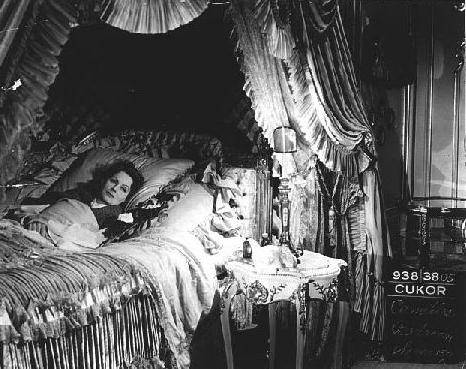
A publicity shot for Happy Go Lovely shows off Vera-Ellen's most famous assets. She is yet another in a long list of Obscure Stars the Siren Loves. Despite snappy comic timing and considerable dancing talent, Vera-Ellen's popularity never really took off. She seems to have been a likable person, but her personal life was unhappy, including as it did two divorces, an infant daughter who succumbed to SIDS and (reputedly) a long battle with anorexia. According to Hollywood columnist Lee Graham, when the dancer weighed herself in the morning, which she always did in the nude, she would take out her contact lenses. When the musical era died Vera-Ellen's career died with it, even faster than that of Cyd Charisse. If you want to see Vera-Ellen at her best, check out her justly famous "Slaughter on Tenth Avenue" number, with Gene Kelly, from Words and Music.

Thứ Hai, 12 tháng 9, 2005
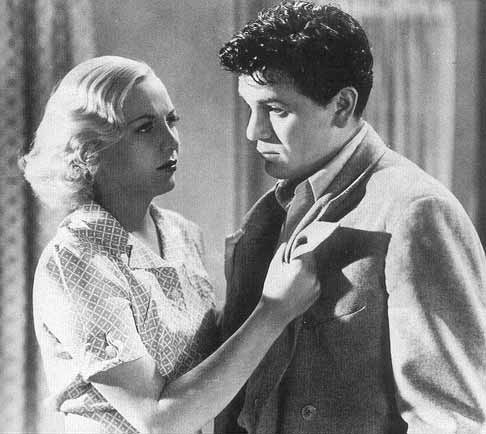
Gloria Dickson tries to talk some sense into John Garfield in They Made Me a Criminal. Garfield, despite (or maybe because of) a raucous and sometimes vulgar manner with the ladies, was a legendary philanderer. While filming this movie, he supposedly "made" both Dickson and Ann Sheridan. (Thanks to Surlyh for that little pun.)
They Made Me a Criminal (1939)
The Siren didn't realize this when she posted it, but her great picture of John Garfield was from a movie she saw last week, They Made Me a Criminal. This 1939 Warner Brothers feature is a pleasure, showing Garfield's charisma and talent in full flower.
In some ways it's an odd movie, with a beginning that suggests film noir. But check the date; it's 1939, no postwar anomie here. What starts out a dark tale of a man who loses everything over a crime he didn't commit turns rapidly into a story of a heel who finds redemption. Garfield plays boxer Jimmy Dolan, who wins the world title as the movie opens in the first of several great fight scenes. Turner Classic Movies suggests director Busby Berkley's experience filming dancers gave him an advantage in filming the boxing moves. The Siren believes, but can't prove, that genius cinematographer James Wong Howe
had more to do with it than the director, especially if you look at the fight scenes Howe shot for 1947's Body and Soul.
As reporters gather around him after the fight, Jimmy expounds on the virtues of clean living, teetotaling and remembering his dear old mom. Next thing you know, he's blotto and lolling around on a couch with Miss Oomph herself, Ann Sheridan, as they both laugh it up over fooling the press corps. Sheridan, whose rising star gave her high billing for a tiny part, wears a black satin dress held up only by attitude and what appears to be black dental floss. You figure half the reason Garfield invited her was to see how long those straps could stand the strain. It's a great scene, with Garfield balancing lovable scamp and dangerous drunk. Unfortunately for his character, Ann's dress is still going strong when an uninvited guest turns out to be a reporter, dead keen to expose Jimmy as a hard-partying hypocrite.
Jimmy punches the guy, then passes out. His crooked manager coshes the reporter in the noggin with a whiskey bottle. Ever see a movie bar fight where someone gets hit over the head with a bottle, and think to yourself, "My word, how can that man still move?" Well, here the bottle kills the guy. The Siren can't decide if that is more realistic, or goes too far in the other direction. Perhaps the reporter had an undiagnosed aneurysm.
The crooked manager persuades Sheridan to escape with him. They load Garfield in the back of a car, drive him out to the country, dump him in a cottage and vamoose. (Here the Siren ponders how empty cottages are as abundant in movies as well-located parking spaces.) But fate catches up with the pair, in the form of a fiery car wreck that leaves them not only dead, but unidentifiable. The world assumes Jimmy killed the reporter. But one cop (Claude Rains) doesn't believe Jimmy is dead. He's determined to bring in the boxer.
Rains' greatest strength--that deep, liquid-caramel voice--renders him ridiculous here, because someone had the bright idea of casting him as a tough New Yorker. Rains fought against having to take this role, but Warners threatened to suspend him and he gave up. He wanders through the movie, pursuing John Garfield and looking about as comfortable as a soaking wet cat. There are times when he seems to have the physicality of the cop right, but then he opens his mouth and it's curtains.
Back to Jimmy. His savings stolen by a crooked lawyer, he becomes a hobo. Here we leave proto-noir-land and are back firmly in the Depression, with a great sequence of Garfield hopping boxcars and getting chased by the railway detectives. (Judging by the way railway detectives are shown in 1930s movies, people must have hated them even more than bankers. Remember Sullivan's Travels?) Finally Jimmy fetches up on a work farm, where the Dead End Kids are serving out juvenile sentences. They're supervised by Kid Billy Halop's sister (Gloria Dickson, pretty good here, but just six years away from her horrible death). What's a boxer to do but straighten out these crazy kids? And how could a sister not love him for it?
I am always happy to see the Dead End Kids, emblematic of the wisecracking, classic New York I love. TCM says they got along well with Garfield, and it shows, with zing in the comic scenes and lightness in the sentimental ones. One great sequence has Garfield and the Kids using an irrigation tank as a swimming hole, with near-disastrous results. Underwater shots of the boys' flailing legs build the suspense. Whether this was Howe's touch, or Berkley's, it's marvelous.
Still more pleasures are to be had from this movie, including an end that didn't quite play as the Siren expected. It is widely available as a budget DVD, and doesn't look bad at all. The Siren recommends it.
In some ways it's an odd movie, with a beginning that suggests film noir. But check the date; it's 1939, no postwar anomie here. What starts out a dark tale of a man who loses everything over a crime he didn't commit turns rapidly into a story of a heel who finds redemption. Garfield plays boxer Jimmy Dolan, who wins the world title as the movie opens in the first of several great fight scenes. Turner Classic Movies suggests director Busby Berkley's experience filming dancers gave him an advantage in filming the boxing moves. The Siren believes, but can't prove, that genius cinematographer James Wong Howe
had more to do with it than the director, especially if you look at the fight scenes Howe shot for 1947's Body and Soul.
As reporters gather around him after the fight, Jimmy expounds on the virtues of clean living, teetotaling and remembering his dear old mom. Next thing you know, he's blotto and lolling around on a couch with Miss Oomph herself, Ann Sheridan, as they both laugh it up over fooling the press corps. Sheridan, whose rising star gave her high billing for a tiny part, wears a black satin dress held up only by attitude and what appears to be black dental floss. You figure half the reason Garfield invited her was to see how long those straps could stand the strain. It's a great scene, with Garfield balancing lovable scamp and dangerous drunk. Unfortunately for his character, Ann's dress is still going strong when an uninvited guest turns out to be a reporter, dead keen to expose Jimmy as a hard-partying hypocrite.
Jimmy punches the guy, then passes out. His crooked manager coshes the reporter in the noggin with a whiskey bottle. Ever see a movie bar fight where someone gets hit over the head with a bottle, and think to yourself, "My word, how can that man still move?" Well, here the bottle kills the guy. The Siren can't decide if that is more realistic, or goes too far in the other direction. Perhaps the reporter had an undiagnosed aneurysm.
The crooked manager persuades Sheridan to escape with him. They load Garfield in the back of a car, drive him out to the country, dump him in a cottage and vamoose. (Here the Siren ponders how empty cottages are as abundant in movies as well-located parking spaces.) But fate catches up with the pair, in the form of a fiery car wreck that leaves them not only dead, but unidentifiable. The world assumes Jimmy killed the reporter. But one cop (Claude Rains) doesn't believe Jimmy is dead. He's determined to bring in the boxer.
Rains' greatest strength--that deep, liquid-caramel voice--renders him ridiculous here, because someone had the bright idea of casting him as a tough New Yorker. Rains fought against having to take this role, but Warners threatened to suspend him and he gave up. He wanders through the movie, pursuing John Garfield and looking about as comfortable as a soaking wet cat. There are times when he seems to have the physicality of the cop right, but then he opens his mouth and it's curtains.
Back to Jimmy. His savings stolen by a crooked lawyer, he becomes a hobo. Here we leave proto-noir-land and are back firmly in the Depression, with a great sequence of Garfield hopping boxcars and getting chased by the railway detectives. (Judging by the way railway detectives are shown in 1930s movies, people must have hated them even more than bankers. Remember Sullivan's Travels?) Finally Jimmy fetches up on a work farm, where the Dead End Kids are serving out juvenile sentences. They're supervised by Kid Billy Halop's sister (Gloria Dickson, pretty good here, but just six years away from her horrible death). What's a boxer to do but straighten out these crazy kids? And how could a sister not love him for it?
I am always happy to see the Dead End Kids, emblematic of the wisecracking, classic New York I love. TCM says they got along well with Garfield, and it shows, with zing in the comic scenes and lightness in the sentimental ones. One great sequence has Garfield and the Kids using an irrigation tank as a swimming hole, with near-disastrous results. Underwater shots of the boys' flailing legs build the suspense. Whether this was Howe's touch, or Berkley's, it's marvelous.
Still more pleasures are to be had from this movie, including an end that didn't quite play as the Siren expected. It is widely available as a budget DVD, and doesn't look bad at all. The Siren recommends it.
Chủ Nhật, 11 tháng 9, 2005
Perfume at the Movies V: Crime in a Bottle

Lugosi shows off his granite-moving technique.
The Siren watched The Devil Bat (1940) while folding laundry, and it was pretty much ideal for that purpose. It is cute, it requires little mental involvement and if you miss a shot while smoothing out the fitted sheets, oh, what the hell. Bela Lugosi seems to be a kindly village doctor, but in reality, he is a maniac who has formulated an aftershave that attracts large bats. These bats he fattens up in his house (complete with many papier-mache secret doorways) using electromagnetic impulses, which means little light-bulb rays like in Frankenstein. He trains the bats to loathe "thees strange Oriental scent" (why, it's Thierry Mugler Angel, 50 years before its time!). The bats smell it and go for the jugular (Angel, I'm telling you).
The rest of the cast of future unknowns charges about trying to figure out where the giant bats are coming from. The ingenue, Suzanne Kaaren, was vaguely familiar to the Siren from a run-in the former actress had with Donald Trump in the 1980s. She was a rent-control tenant, and Trump wanted her to move, but she wouldn't. The Donald lost that one, so obviously Suzanne was a much tougher cookie than she seems while emitting little shrieks over the bats.
One by one, all the vacuous young men innocently splash on Bela's version of Aqua Velva and get chomped. Of course, Bela won't try any himself; "I haff a violent deeslahk of perfumes," he says forcefully to someone who wants him to sample.
The Devil Bat made the Siren a little sad, too. Less than ten years after Dracula made him a star, Lugosi was in this Poverty Row production, still giving it his all despite costars whose acting rarely rises above the high school spring musical level. It would make an interesting and rather poignant curtain-raiser for a revival of Ed Wood.
Thứ Tư, 7 tháng 9, 2005

Đăng ký:
Bài đăng (Atom)