Hiển thị các bài đăng có nhãn Anecdote of the Week. Hiển thị tất cả bài đăng

Thứ Ba, 18 tháng 8, 2015

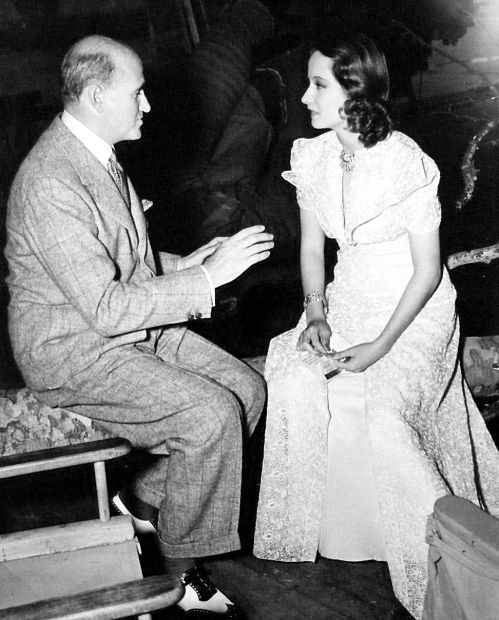
"Hello, Elaine? ... I Am Going to Kill You": The Tale of Elaine Barrie and John Barrymore


The curtain parted swiftly with a clang of rings on rod.

“I repeat, Madam, what would you do if I tried to throw you off the terrace?”

The scene is a twentieth-floor apartment on East 79th Street, Manhattan, the year 1940. “Madam” is Elaine Barrie, aka Elaine Barrymore, and the speaker is her husband, John Barrymore.

And no, he wasn’t rehearsing.

Those are the first two lines of Elaine’s autobiography, ripely titled All My Sins Remembered. Her ghost writer, given due credit on the jacket, was Sandford Dody. As was the style with such memoirs back in 1964 when it was published, All My Sins Remembered reads more like a novel, with florid descriptions and elaborate conversations no one could possibly recall in such screenplay detail.

It’s structured like a script, too. As the curtains part in the first line, Barrymore has been in a coma, a not-infrequent occurrence as late-stage alcoholism kept nudging him toward the grave. Once he awakens, and sees the handsome male nurse assigned to keep him from dying, Barrymore terrorizes the man into leaving and begins to circle Elaine, accusing her of hiring a male hooker in disguise: “These bastards have a million disguises. Window cleaners, doormen, elevator boys, radio repairmen.” After several pages of ranting and circling, Barrymore drags his wife to the terrace: “My dear. You wanted me to give you all New York. There it is out there. You are going to get it all in one fell swoop!”

“Was this really the great John Barrymore threatening to kill me?” wonders Elaine, from twenty stories up.


Aaaaand … flashback, in the next chapter, to young Elaine’s girlhood worship of the Great Profile, how she kept a still of him as Svengali over her bed (how’s that for bizarre teenage sex objects?), and how she interviewed him for Hunter College’s paper when he was 52 years old and hospitalized for “severe flu." The phony flu was a flashing yellow light that ambitious 19-year-old Elaine drove straight through, on her way to becoming Barrymore's fourth and final wife.

The Siren bought this long-forgotten book off a sidewalk card table, took it home and gobbled every page like a plate of french fries. When she had the chance to buy Sanford Dody’s own autobiography, deliciously titled Giving Up the Ghost, she seized it, just to find out if he believed all the things he'd put in his own book. Dody's handiwork included Helen Hayes' On Reflection, First Person Plural with Dagmar Godowsky (that one's delightful), and The Lonely Life by Bette Davis (she rewrote the whole thing at the last moment, and Dody never forgave her).

And he didn't buy everything Elaine told him, no. Dody didn’t believe, for example, that Elaine fell instantly in love with the wreck that Barrymore had already become by 1934. He considered her starstruck and self-deluded about her motives for the marriage. But he didn't entirely see her as the gold-digger portrayed in the 1930s press and indeed by most John Barrymore fans to this day. He gave Elaine credit for striving to keep Barrymore sober and working, and for trying to look after his health.

Certainly she yearned to become an actress, and was eager for Barrymore to help her. In that regard, landing Barrymore was a Pyrrhic victory. She got plenty of space in the gossip columns, sure. But aside from a series of small parts in plays, a short called How to Undress for Your Husband (which somehow she doesn't mention in her book) and one small role in Midnight, Elaine's acting career never amounted to much. By the time Dody met her, Elaine was a businesswoman dividing her time between Haiti and Manhattan, producing woven-rattan baskets and placemats in the one place, to be sold at Bloomingdale’s in the other.

But one thing Sandford Dody did believe was that John Barrymore, right after coming out of an alcoholic coma, dragged his wife to their terrace, bent her over the railing and came close to pushing her over. Dody believed that, and quite a bit more. All My Sins Remembered is the memoir of an abusive marriage, published 14 years before Mommie Dearest.


All Hollywood autobiographies are exercises in unreliable narration. It isn’t so much that they deliberately lie (although some of them do that, too), it’s that they are in a business that is fundamentally about tale-spinning. Add the literary efforts of a ghostwriter, and boy do they spin. What makes this book such a temple-rubbing astonishment is that Elaine's spin isn’t vengeful, à la Christina Crawford. Her message isn't, “You should hate this great actor I married, because he was an insanely jealous and at times violent drunk.” No, these stories are meant to prove that this was a doomed, but genuine, romance. It was tempestuous. He called her Ariel, she called him Caliban, get it? “If only we had really been young together,” reads one of the picture captions, and another adds, “but it was too late for anything.”

Dody says that after many sessions of charming and/or wistful little anecdotes, Elaine let her guard down one day: “Up to now there had always been a tolerant smile about the drinking, a smugly raised eyebrow concerning the jealousy. But this session was different. With chilling eloquence, Elaine came through for me."

So this is the tale told by Elaine and Sandford:

Born Elaine Jacobs, soon after that hospital meet-up she'd changed her name to Barrie, "as close to Barrymore as I dared." She wanted out of her middle-class life on the Upper West Side, and she dreamed of becoming an actress. Barrymore, for his part, liked her bookishness, her youth and her looks, which were more Modigliani than Hollywood.

John and Elaine’s courtship was a staple of the gossip columns, especially one episode when John broke it off with Elaine and boarded a country-country train. She pursued, egged on by the newspapers that in turn pursued her, and when Ariel and Caliban caught up, they reconciled. It was to be the pattern of their time together, “tender reconciliations after spectacular quarrels,” as Barrie’s 2003 New York Times obituary put it.


According to Elaine, those “quarrels,” if you want to call them that, and the Siren doesn’t, were there almost from the beginning. Before their marriage John took Elaine to Havana on board his yacht, the Infanta, for a romantic getaway. She had already slept with him, but for appearances’ sake Elaine took along her mother, Edna. (Edna was quite a character, as omnipresent in her daughter’s life as Lela Rogers was in Ginger's. When Dody met them years later, Edna and Elaine were living together, still joined at the hip.)

Elaine arrived at the Cuban hacienda of John's brother-in-law Arturo “Mussie” de Barrio and was greeted by Mussie’s good-looking younger brother with “En esta su casa.” Whereupon John slapped Elaine’s face with a force that knocked her hat askew.

And everyone ignored it. Even Edna, who was standing right there. Elaine says her mother greeted the other guests, saying, “How do you do, señor?” then, under her breath, “Please don’t look at my daughter...Gracias, señor — don’t notice her...” Once they were alone, Edna tried to get her daughter to leave. Elaine said, “Oh, for God's sake, John’s sorry. He couldn’t help it, dear.” And later he apologized. Then John proposed, and Elaine accepted, although it took them a while to get hitched.

On the beach, John berated Elaine for wearing swimsuits that were too sexy. On board the boat returning from Havana, a man smiled at Elaine, and John tried to throw him overboard. John then chased Elaine into her stateroom, swung hard at her face and missed only because Edna’s fist had just connected with his jaw. ("He's lucky I didn't hit his nose," said Edna later. "That would have been the end of the Great Profile.")


Back in Hollywood, where Elaine and Edna had moved to be with him as he filmed Romeo and Juliet, John invited Irving Thalberg and Norma Shearer to Elaine’s birthday dinner. A thrilled Elaine dressed up and worked like crazy to charm them. Midway through the dinner, John waited for a quiet moment and asked Shearer, “Tell me, Norma, I’m curious. I can’t stand whores — can you?” As Elaine, her mother and the Thalbergs tried to regain their composure, John filled his wineglass to the rim and, to make sure the point couldn’t possibly be missed, added, “The world has certainly changed. Tarts were never countenanced at a gentleman’s table, amongst such a lofty congregation, unless, of course, they were served as a sweet.”

The Thalbergs finished the meal and departed as fast as manners would permit. John drove the guests home and phoned Elaine later. His greeting was, “Hello — Elaine?...I am going to kill you.”

When they finally got married some months later, in Yuma, Ariz., on Nov. 9, 1936, the following night John accused Elaine of sleeping with the bellboy and threw a glassful of Dubonnet, as well as the decanter, at her head. He missed and ruined the satin drapes, not her face.


Towards the end of their marriage they toured in a play together, by all accounts a misbegotten thing, called My Dear Children, directed by Otto Preminger. Barrymore played an aging matinee idol, and Elaine played his daughter; she picked the property herself. At that point, people were attending a John Barrymore performance to see if he'd go up on his lines or possibly even pass out, but for a while attend it they did. Above is a photograph of the play’s purported comic highlight. John played drunk often, would execute the spanking with all his strength, and Elaine went onstage every night in fear. She said she decided to leave, and accosted John in his hotel room to give him the news (by this time their rooms were separate). He yelled, “You aren’t going anywhere, you bitch,” unzipped her dress so hard it tore, twisted her arm and struck her face. Elaine called for the nurse who was on Barrymore guard duty, but she'd already locked herself in the bathroom. Elaine ran down the corridor in little more than her underwear and yelled for help until actor Lloyd Gough, who was in the play’s cast, pulled her into his room.

The producer persuaded Elaine not to walk out. On the company’s arrival in St. Louis, Preminger in turn coaxed Elaine to attend a luncheon with 300 of the city’s social and political elite. As Elaine walked to her chair, John kicked her in the shin in full view of the assembly. “You could hear the collective gasp in Chicago,” she said, but once again, everything proceeded as though nothing had taken place. That is, until John, drunk to the point of semi-coherence, rose on his hind legs and gave a rambling speech that embarrassed everyone into silence.

Elaine left the show, more or less by mutual agreement, before it hit Broadway. They were soon divorced, but the terrace incident actually happened after that, when John had temporarily moved back in with Elaine. That in turn was after she had returned to My Dear Children, now on Broadway, and started padding her backside for the spanking scene. When John still managed to hurt her, she'd revenge herself by biting his hand. Again they separated, and this time Elaine didn't go back. "What was it that definitely decided me to leave?" she asks, rhetorically. "His last threat to kill me?" I don't know, Elaine, but I sure as hell hope so.

Elaine hadn’t remarried when the book was written, and never did. All My Sins Remembered ends abruptly with Barrymore’s death in 1942. Even given a short time frame to cover, Dody had a hard time putting this one together. He complained that Elaine spent most of her day on the phone to Bloomie's about her “goddamned mats” and never offered him so much as a bowl of mixed nuts, no matter how long he was at her apartment. He’d accepted the assignment because he saw it as a book that was really about John Barrymore, whom he worshipped — as an actor.

I pitied both Mr. and Mrs. John Barrymore. The great star whose glow had attracted Elaine and died light-years before she’d ever come on the scene. She and her mother were late arrivals at the tragedy but they still got into the act….

I knew Elaine much better and I now knew Barrymore too well. As keeper of the flame, Elaine played with fire and couldn’t complain about her burns. But as awed as I was by the enormous gifts of Barrymore, his descent into the bathetic and his wallowing self-indulgent disregard of others — especially his daughter, Diana, with whom I had once worked in Hollywood — were unattractive in the extreme.

...I pitied the great actor, but I found it difficult to adore him, and this was creating a problem since Elaine still did despite her stories.

The book sold poorly. "The public no longer cared about Ariel and Caliban and their dusty shenanigans,” says Dody. All My Sins Remembered is a hell of a read, but (or do I mean because?) the dialogue is like a crazed mating dance between Jerry Wald and Noel Coward. In his own memoir Dody cheerfully admits to having written lines for Barrymore that the man never said in his life. Admits, hell, Dody brags.

You can feel him straining to lighten the mood. Mother Edna is used extensively for comic relief, and many of her lines have a whiff of the Ghost. After she socks John in the jaw, Edna announces, “We are leaving the Good Ship Lollipop, my dear, and right now!” Even the worst marital episodes tend to end with either Elaine or John coming up with some witticism. When John throws a full decanter at her, Elaine looks at the ruined drapes and supposedly cracks, "Let all Hollywood use William Haines. For the the ultimate in interiors give me that unmistakable Barrymore touch." The scene on the terrace, however, ended with Elaine telling John go ahead, kill her. He burst into tears and let her go, and then she began to sob with him. That, Dody admits in his book, is the way Elaine said it usually ended.


Barrymore’s forlorn childhood is covered, sympathetically. On a personal level he never had a chance, not with his alcoholic and/or neglectful parents, and adults around whose idea of how to comfort the child Jack, when his mother failed to show for a dearly anticipated lunch, was to ply him with cake and gin. As for Ethel and Lionel, Elaine admired them as artists, especially Ethel. But they despised her, and she was not fond of them: “They were hypocrites, especially Lionel, who was guilty of excesses that revolted even John. They both drank more than he did though that may seem impossible.” (It does, actually, but who knows.)

Hollywood books are replete with the hell-raising adventures of John Barrymore and his mates, such as journalist Gene Fowler, Ben Hecht, Charles MacArthur and poet/critic Sadakichi Hartmann. The Bundy Drive Boys, they called them, a proto-Rat Pack who drank, wenched, gambled, made for great copy and were probably fun, if you were one of them. Elaine wasn’t one of them. To her, they were an unrelenting pain in the neck, the men who would coax or push her husband off the wagon every time. They, in turn, took posterity's revenge. In Gene Fowler’s biography of Barrymore, says Elaine, “I emerged as a combination of Lilith and the inventor of diptheria.”

Some may have seen things a bit differently. From All My Sins Remembered, this is Elaine's account of Christmas 1935.
John took me up to Nyack to week-end with his old friend, Charles MacArthur and his wife, Helen Hayes. It was not only exciting for me but most pleasant. During the evening, while John and MacArthur were at their brandy and reading poetry aloud, I helped my hostess trim her Christmas trees.

He eyes glowed as she spoke of her adored husband. She then became silent as she studied me. It was obvious that she had something on her mind and didn’t know how to say it. She decided to take a stab at it. “Elaine, I’m always grateful when Charlie does his heavier drinking at ‘21.’ When he passes out, they put him in a little room upstairs they’ve told me about — I know he’s safe and I can stop torturing myself. It isn’t always that comforting. Sometimes I’m worried half to death!”

This rush of confidence astonished me, until I realized it was more a veteran’s subtle warning to a novice. How kind she was, and how unnecessary her concern.

“It’s going to be different with me, Miss Hayes. John has promised to stop that kind of drinking — and anyway I’m going to see to it that he does.”

She looked at me with that familiar and sad little smile.

“I’m serious, Miss Hayes. You’ll see. It’s all going to be different with us.”

I could almost hear her sigh as she busied herself with a frosted ornament.


(This post is a late-breaking contribution to Crystal Kalyana Pacey's The Barrymore Trilogy Blogathon, at her blog, In the Good Old Days of Classic Hollywood. Many great contributions can be found at the links page.)


Thứ Ba, 27 tháng 5, 2014

Miss Wright Regrets She's Unable to Pose Today


Above, Teresa Wright bestows the look of love on Dana Andrews at the end of The Best Years of Our Lives. They showed it again last night on TCM, for Memorial Day, causing some to point out that the holiday is about remembering the dead, not honoring the living veterans. In the way of most pedantry, this is technically correct, and tiresomely literal. Wyler's film needs no grave scenes; it is death-haunted throughout. Fredric March, Harold Russell and Dana Andrews carry the dead with them, and they always will.

It falls to the women to help bring them back to life, and Wright was the perfect foil for the traumatized Dana Andrews. Throughout her career she played normal, and showed that a good girl has as many angles as a bad, if you approach her with sincerity and don't condescend. What makes her Charlie in Shadow of a Doubt so marvelous, and somewhat unusual in Hitchcock's filmography, is that the girl's essential decency is, for once, made more intriguing and less predictable than the serial killer she's up against.

Wright was eager to play this role for Wyler, says Goldwyn biographer A. Scott Berg, because Peggy Stephenson is a homewrecker, albeit one with the purest of motives. Wright was getting a little tired of being what Wyler called "the best cryer in the business." Then again, this smart and dedicated actress also knew exactly what she did and did not want from the business. The Siren here gives you a key clause from the contract Miss Teresa Wright signed with Samuel Goldwyn Productions at the outset of her career:

Miss Wright shall not be required to pose for photographs in a bathing suit unless she is in water. Neither may she be photographed running on the beach with her hair flying in the wind. Nor may she pose in any of the following situations: in shorts; playing with a cocker spaniel; digging in a garden; whipping up a meal; attired in firecrackers and holding skyrockets for the fourth of July; looking insinuatingly at the turkey for Thanksgiving; wearing a bunny cap with long ears for Easter; twinkling on prop snow in a skiing outfit while a fan blows her scarf.

Perhaps the second sentence of that clause was what Sam Goldwyn had in mind when he allegedly tried to get Wright to loosen up a bit during filming of The Little Foxes by calling to her from behind the camera, "Teresa, let your breasts flow in the breeze!"


You won't find much in the way of Teresa Wright cheesecake, but this shot is readily available on the Internet. The Siren includes it to demonstrate that had she chosen to do so, Miss Wright could have looked insinuating any old time she wanted.


Chủ Nhật, 5 tháng 5, 2013

Happy Cinco de Virginia Mayo!

From the whimsical suggestion of Comrade Lou Lumenick, who announced on Twitter a craving to see She's Working Her Way Through College, here's a little celebration of the gorgeous Virginia Mayo. A great screen moll, she was exquisite in Technicolor musicals and delightful in The Secret Life of Walter Mitty, which the Siren will defend to the death no matter how many times you quote James Thurber's horrified reaction at her.


Mayo was discovered by Samuel Goldwyn when she was playing in a Billy Rose revue at the Diamond Horseshoe in New York. The revue was called, and this is the sort of thing the Siren tries to remind herself of when she gets all dreamy-eyed about the golden age of New York nightlife, Mrs. Astor's Pet Horse. Sure enough, like Mack Sennett before her, Virginia Mayo was playing in a horse act, although she was the straight woman, and not playing either end of the horse. The act itself was called "Pansy." (The Siren has no more information than that, nor does she want any.) Samuel Goldwyn swept Virginia Jones, who was performing under her brother-in-law's surname of Mayo, off to Hollywood to become the next Anna Sten.

From A. Scott Berg's definitive Goldwyn, which the Siren hopes you own:

[Goldwyn] provided her acting lessons, voice lessons, speech lessons, and dance lessons. Twice a week, Hollywood's leading charm coach, Eleanore King, instructed her in posture and appearance. A nutritionist put her on a diet. A masseuse "contoured" her face after Miss King pronounced Virginia Mayo's cheeks "too fat for screen work." Goldwyn himself called her every night at nine o'clock, inquiring if she was keeping up with her lessons and if she had brushed her hair one hundred strokes.

After six months of this regimen, Virginia Mayo had improved in every department. But one problem remained. Every time a motion picture camera turned her way, she froze.

Mayo had warmed up quite a bit by 1946. And by 1949, she was positively smokin'.

"Hotcha do, Countess?"


(To celebrate the real Cinco de Mayo, do read the wonderful Bobby Rivers on La Perla, the golden age of Mexican cinema, and the great cinematographer Gabriel Figueroa, right here.)

Thứ Tư, 3 tháng 4, 2013

Rat Pack Rashomon

The Siren has not forgotten her more-patient-than-ever readers, truly she hasn't. It's just that lately her life resembles this:


But she will never abandon her little corner of the Web. (Here the Siren wants everyone to remember the Alamo—specifically, Laurence Harvey making sure the sun catches his ruffles just right.)


Where else can the Siren blather on about Mary Astor's invention of pan-chromatic makeup and Vera Zorina in I Was an Adventuress? It's just that when the irresistible force of life meets the immovable object of work, something's gotta give, something's gotta give, something's gotta give.

Which brings us to this post, involving a man who did rather a good version of that song.


The Siren has been reading The Richard Burton Diaries. You could say, in fact, that the Siren has been obsessing over the Burton diaries. Her only reading time is on the subway, the dadgum thing weighs almost as much as her six-year-old, and yet the Siren lugs it back and forth because she does not want to let it go. The Diaries made her want to revisit some Burton movies (the good ones)—maybe even try out Burton as Trotsky because damn, the part about filming that one is funny. The whole book is delightful—very sad in some ways, but a marvelous picture of a restless, fiercely intelligent mind.

And lord have mercy, how he gossips. Evidently the only person who read it while he was writing it was Elizabeth Taylor, and so he feared no backlash. (Not even from her.) If the Siren tells you that this is, no lie, the only book she's ever read in which someone had a bad word to say about Audrey Hepburn, you'll get the general idea. It's weirdly enhanced by the most maniacal footnotes the Siren has ever encountered, via Professor Chris Williams. Par exemple: if the Burtons stay "at the Plaza Athénée," you get a note elaborating: "Hotel Plaza Athénée, Avenue Montaigne, Paris." The Siren at this point loves Williams almost as much as Burton.

The Siren adores how Burton chronicles his incredibly voracious reading habits in great detail, and she was immediately caught by his acerbic dissection of a certain nostalgic passage in David Niven's The Moon's a Balloon. The two sections, side by side, give a mirror-image view of Hollywood glamour, the Rat Pack, Sinatra, Bogart, and especially Burton and Niven themselves.

But they are quite, quite different. So, we'll give Niv the first word.


It was the 4th of July and Bogart had taken what Niven says was the highly unusual step of inviting women aboard his celebrated yacht, the Santana. That meant David Niven brought along his wife Hjordis (possibly the most universally disliked Hollywood spouse of that or any era, but that's a whole other post, at least). So Lauren Bacall (I do not call the goddess Miss Bacall "Betty" as I have never been introduced) came along to keep Hjordis company. So Bacall had her hands full. As Niven tells it,

We dropped anchor in Cherry Cove and Frank Sinatra moore alongside us in a chartered motor cruiser with several beautiful girls and a small piano. After dinner, with Jimmy Van Heusen accompanying him, Sinatra began to sing. He sang all night.

There were many yachts in Cherry Cove that weekend, and by two in the morning, under a full moon, Santana was surrounded by an audience sitting in dozens and dinghies and rubber tenders of every shape and size.

Frank sang as only he can, with his monumental talent and exquisite phrasing undimmed by a bottle of Jack Daniels on top of the piano.

He sang till the dew came down heavily and the boys in the listening fleet fetched blankets for their girls' shoulders. He sang till the moon and the stars paled in the predawn sky. Only then did he stop and only then did the awed and grateful audience peddle silently home.


Now we shall let Burton have his say.

I read David Niven's autobiography yesterday in one sitting. It is very funny though not very well written and is, like all actors' biographies, very anecdotal and full of "and then Mike Todd called me and said 'Get your ass over here'" etc. He describes one scene on Bogart's yacht which is not what happened at all as I was there. He describes Sinatra singing all through the night on a motor yacht with a lot of other yachts around 'awe-struck' he says. Frankie did sing all through the night it's true and a lot of people sat around in boats and and got drunk it's true but Bogie and I went out lobster-potting with Dumbum [Bogart's Danish crewman, according to the every-ready Prof. Williams] while Frankie was singing kept on making cracks about Betty [Bacall] sitting on Sinatra's feet etc. and Frankie got really pissed off with Bogie and David Niv who describes himself as bewitched all through the night was trying to set fire to the Santana at one point because nobody could stop Francis from going on and on and on. I was drinking 'boiler-makers' with Bogie Rye Whiskey with canned beer chasers so the night is pretty vague but I seem to remember a girl having a fight with her husband or boy friend in a rowing dinghy and being thrown in the water by her irate mate. I don't know why but I would guess that she wanted to stay and listen to Frankie and he wanted to go. And Bogie and Frankie nearly came to blows next day about the singing the night before and I drove Betty home because she was so angry with Bogie's cracks about Frankie's singing. At the time Frankie was out of work and was peculiarly vulnerable and Bogie was unnecessarily cruel. But any way it is not at all like Niv's description.


So, the Siren asks the same question as in Kurosawa's great movie: out of these, which is believable?

Thứ Hai, 11 tháng 3, 2013

Anecdote of the Week: Buster Keaton Confronts Disaster (and Joe Schenck)


From an interview with Buster Keaton in Sight and Sound, Winter 1965/66:

My original situation in [Steamboat Bill, Jr.] was a flood. But my so-called producer on that film was Joe Schenck...Schenck was supposed to be my producer but he never knew when or what I was shooting. He just turned me loose.

Well, the publicity man on Steamboat Bill goes to Schenck and he says: 'He can't do a flood sequence because we have floods every year and too many people are lost. It's too painful to get laughs with.' So Schenck told me, 'You can't do a flood.' I said, 'That's funny, since it seems to me that Chaplin during World War One made a picture called Shoulder Arms, which was the biggest money-maker he'd made at that time. You can't get a bigger disaster than that, and yet he made his biggest laughing picture out of it.' He said, 'Oh, that's different.' I don't know why it was different. I asked if it was all right to make it a cyclone, and he agreed that was better. Now he didn't know it, but there are four times more people killed in the United States by hurricanes and cyclones than by floods. But it was all right as long as he didn't find that out, and so I went ahead with my technical man and did the cyclone.'

Thứ Ba, 19 tháng 2, 2013

Gentlemen, Mary Pickford Doesn't Need Your Advice

In 1912, Mary Pickford, age 20, was working at Biograph Studios. D.W. Griffith was casting a short movie called The Sands of Dee.

Pickford wanted the lead and, since "abundant hair was a requisite," she thought she had a pretty good shot.


But, as she tells it in her 1955 autobiography Sunshine and Shadow, recently Griffith had also asked Pickford to wear a grass skirt in Man's Genesis. She'd refused to do any such hussy-ish thing as flashing her bare legs and feet to the paying public. Newcomer Mae Marsh, who immediately prior to Biograph had been working a counter at Bullock's Department Store, donned the grass get-up.

Perhaps Pickford's qualms strike you as quaintly Victorian. The Siren offers a reminder that in her heyday, Mary Pickford had a mind as shrewd as any ever to hit Hollywood:


You can see a clip of Man's Genesis here, although you may want to mute the sarcastic commentary. Musketeers of Pig Alley, it ain't. The upshot was that a wrathful Griffith gave Marsh The Sands of Dee as a rebuke to all who would refuse to sport grass skirts whenever Genius asked them to do so.

Pickford was peeved, as was Blanche Sweet's grandma, who fumed, "I don't see how she can possibly play the part. The girl hasn't any hair." But, for now, the joke was on them; Pickford admitted that Marsh was wonderful in Sands of Dee.

The future Queen of the Movies donned a hairshirt, so to speak: "If a little girl fresh from a department store could give a performance as good or better than any of us of who had spent years mastering our technique, then pictures were not for me."

She decided to go back to the theater. In this she was encouraged by the recollection of an encounter with the author of her breakout play, The Warrens of Virginia. She'd just started at Biograph, and William de Mille hadn't exactly been happy for her.


Unbeknownst to Pickford, de Mille also had written a letter to the legendary producer David Belasco, lamenting the young actress' career path to that point:

...Do you remember that little girl, Mary Pickford, who played Betty in The Warrens of Virginia? I met her again a few weeks ago and the poor kid is actually thinking of taking up moving pictures seriously. She says she can make a fairly good living at it, but it does seem a shame. After all she can't be more than sixteen or seventeen and I remember what faith you had in her future; that appealing personality of hers would go a long way in the theater, and now she's throwing her whole career in the ash-can and burying herself in a cheap form of amusement which hasn't a single point that I can see to recommend it. There will never be any real money in those galloping tintypes and certainly no one can expect them to develop into anything which could, by the wildest stretch of imagination, be called art.

I pleaded with her not to waste her professional life and the opportunity the stage gives her to be known to thousands of people, but she's rather a stubborn little thing for such a youngster.

So I suppose we'll have to say goodbye to little Mary Pickford. She'll never be heard from again, and I feel terribly sorry for her...

Pickford told her Biograph boss adios. Griffith responded in accents of doom: "Do you suppose for one minute that any self-respecting theatrical producer will take you now after spending three years in motion pictures?"

Mary Pickford retorted that next year, she'd be on Broadway in a Belasco production.


The theater season didn't start for a few months, so she remained at Biograph, where she was not under contract. One can deduce from Griffith's subsequent conduct that he was miffed. He'd just hired two promising sisters, Lillian and Dorothy Gish, whom Mary had known previously and introduced to him. In the perpetual way of bosses, Griffith played the newcomers against his recalcitrant star. He began one day of shooting with the gallant sally, "Pickford, why don't you get a nice costume like Gish's?" He ordered them upstairs to swap dresses. They knew what was going on, of course, and Lillian told Pickford that it was all right, she liked Mary's dress better anyway.

Once back on the set, though, Mary's blood was up: "It's too bad, Mr. Griffith, that you can't get a good performance without trying to come between two friends."

"That stung," wrote Pickford. Griffith called her a baby. Pickford yelled back, "Mr. Griffith, I don't like the way you direct and I never have. If you were a real director you wouldn't have to try to turn me against Lillian to get a good scene. Why don't you think of a more honest way of directing me?"

Griffith called her "a half-pint" and gave her a shove. Pickford tripped and wound up on the floor, calling him a "disgrace to the South" and "to the North as well." Griffith tried to help her up, she waved him off and stormed to her dressing room, where she began packing in a suitcase-banging manner calculated to be heard all over the set.

Griffith gathered his cast and crew and stood outside Pickford's door, leading them in a rendition of "So Long, Mary." She melted, they made up.

But she still left, immediately after making The New York Hat, the most successful thing she did for Griffith. You see, Mary had already lined up a new gig...with David Belasco.


One of Pickford's first actions after returning to Belasco, who had a hard-nosed reputation in his own right, was to negotiate a $25-a-week raise from her Biograph salary. That gave her $200 a week, a fortune in those days. (Years later Samuel Goldwyn remarked that "it took longer to make one of Mary's contracts than it did one of Mary's pictures.")

1913 found her starring on Broadway in Belasco's The Good Little Devil. It was a hit. Opening night in Philadelphia, Griffith was in the front row.


Little more than a decade later, in 1924, D.W. Griffith's increasingly mismanaged finances caused him to break ties with United Artists, the company he'd founded with Pickford, Charlie Chaplin and Douglas Fairbanks just five years before. United Artists spent the next decades establishing itself as the Pearl White of movie studios, seemingly always in some sort of peril; but Pickford sold her stock in 1956 for $3 million.


To return to 1913; Pickford had done precisely what she said she would. Problem was, she didn't like acting in plays. Or, rather, she discovered she loved film acting more: "the novelty, the adventure, from day to day, into unknown areas of pantomime and photography." Back she went to Hollywood, and signed with Famous Players-Lasky. The following year, the massive success of Tess of the Storm Country cemented Mary Pickford as the first superstar. As Scott Eyman put it, "Her public--indeed, the whole world--loved her as no actress will ever be loved again."

William C. de Mille kept his lower-case "d" but followed brother Cecil B. D. to Hollywood, where he directed more than 50 films (most of them, aside from Miss Lulu Bett, now lost).

In 1929, the man who in 1909 told David Belasco that no one could expect these "galloping tintypes" to develop into art co-hosted the inaugural awards ceremony for an outfit calling itself the Academy of Motion Picture Arts and Sciences. The other host was Douglas Fairbanks, Mary's second husband.


The following year, de Mille hosted solo, and presented the Best Actress Oscar to Mary Pickford, for Coquette.

Thứ Tư, 13 tháng 2, 2013

Anecdote of the Week: Runaway Romance, Hollywood Style


From The Moon's a Balloon, by David Niven, the story of a cross-country trip that begins after a tryst in the St. Regis Hotel in New York. The Great Big Star was, as you probably know, Merle Oberon.


By the autumn of 1936, I was very much involved with a GBS (Great Big Star)...The GBS was gorgeous and quite adventurous.

'Let's not fly back to California--let's take the sleeper to Detroit--buy a Ford and drive it out.'


She bought the car--I drove and the first night we spent together in Chicago.

She disguised her well-known face with a black wig and dark glasses and called herself Mrs. Thompson. In the lobby nobody recognized her. Though it was highly unlikely that anyone would recognize me, I went along with the game and called myself Mr. Thompson.

The desk clerk handed GBS a telegram, 'For you, Mrs. Thompson.' I was mystified.

'How could that happen?' I said.


'I promised Jock Lawrence I'd tell him exactly where we'll be all the way across in case the studio needs me urgently, then I can hop a plane.'


She opened the envelope--'TELL NIVEN CALL GOLDWYN IMMEDIATELY    JOCK.'

'Forget it,' said the GBS. 'Call him tomorrow--it's too late now.' We went to bed.


The next night we spent in Cedar Rapids, Iowa.

'Telegram for you, Mrs. Thompson,' said the desk clerk.

TELL NIVEN CALL ME TONIGHT WITHOUT FAIL    GOLDWYN.

We didn't want the idyll spoiled even though the new signature gave me an eerie feeling of impending doom.


In North Platte, Nebraska, the wording was crisper--

ASK NIVEN WHAT HE THINKS HE'S DOING HAVE HIM CALL TONIGHT OR ELSE    GOLDWYN.

Still we pressed happily on across the country, and the telegrams became more alarming at each step. The one at the Grand Canyon was very unattractive indeed--


TELL NIVEN HE'S FIRED    GOLDWYN.


The GBS was made of stern stuff--'He can't do that,' she said, 'and anyway he wants me for two more pictures. We'll call him when we get to California--not before.'


I was so besotted by the GBS that I even managed to enjoy the rest of the trip except when we turned off the main road in the middle of New Mexico and got stuck in the desert at sunset.


Finally, the ten-day trip ended and we crossed the State Line into California. From a motel in Needles, with great apprehension, I called Goldwyn.

'Do you know what you're doing, you stupid son of a bitch?' he yelled. 'You're doing about a hundred and thirty-five years in jail. Ever heard of the Mann Act and taking women across State Lines for immoral purposes? Think what Winchell would do to that girl, too, if he got the story--you're through I tell you...you're...'

His voice was pitched even higher than usual. The GBS leaned across the bedside table and grabbed the phone out of my hand.


'Sam, darling,' she purred, 'I've had a simply gorgeous time so don't be angry with David...I'll explain it all to you when we get back tomorrow...' She motioned me to go out of the room and finished her conversation alone. When she found me later, she said, 'Sam's sweet really, everything's okay again, you've been reinstated.'


Thứ Tư, 16 tháng 1, 2013

The Man Who Knew Too Much (1934), With Bonus Anecdote


The Siren is pleased to announce that the Criterion Collection edition of Alfred Hitchcock's 1934 The Man Who Knew Too Much has hit the street, and her essay on this marvelously compact tinker-toy of a film is up at their website. This Man has been languishing in murky public-domain editions that completely failed to do it justice; Criterion has made it sparkle again, the better to find new admirers. The Siren was tickled to death to be name-checked by the celebrated J. Hoberman in his review, but even more so was she pleased to find out that Hoberman, like her, prefers the original to the remake.

Here, a brief excerpt from the Criterion essay:

Hitchcock had seen M and at first wanted Lorre to play the gang’s hit man. So in the spring of 1934, he cabled Paris, where Lorre and his longtime love Celia Lovsky were living in glum poverty. Back in Berlin, Lorre’s successful stage career had included notable roles for Bertolt Brecht, and the thunderbolt of M, released in 1931, gave the actor the greatest hit of his career. But less than two years later, as soon as Hitler became chancellor, Joseph Goebbels began putting restrictions on Jews in the film industry. By July of 1933, they had been banned from films altogether. Lorre, a Hungarian-born Jew, got out of Berlin early that year.

With Lovsky, he moved first to Vienna, then to Czechoslovakia, then finally to Paris, where even his excellent French couldn’t get him much more than small parts. At age thirty, his struggle with morphine addiction was already more than seven years old and had necessitated a recent and expensive “rest cure,” which ate up what little Lorre had earned so far in France. According to Stephen D. Youngkin’s biography The Lost One, when Lorre left for London to take up the first good movie role he’d been offered in many months, the actor had to borrow the cost of a ticket from his brother.


The Siren used The Lost One: A Life of Peter Lorre by Stephen D. Youngkin as a reference, and she reiterates her enthusiastic recommendation. It's a wonderfully complete resource on the actor's life and work. Since we were just discussing one of the films that Peter Lorre made with Sydney Greenstreet, from Youngkin's book here's a glimpse of this perfect team at work--sort of.

In their game of cat and mouse, Lorre did the stalking. When Greenstreet warned him he would cut off both his hands if he did not stop projecting himself into his scene, Lorre amiably checked, "Fine, then I'll play the scene with stumps and steal the whole show." Irving Yergin said thatt Lorre loved to tell of being on the set of The Conspirators (1944) with Sydney Greenstreet and Hedy Lamarr, who was wearing a low-cut dress. "Hey Sydney," he joked, "you're the only person on the set with a pair of tits." According to Lorre, production was held up for two hours while Greenstreet and Lamarr chased him around the set, no doubt fitting one reviewer's description of the actors as a "Pekingese and a great dane out for a romp." Lorre wrapped his take on one of his favorite stories with Jack Warner fining him ten thousand dollars for the day.


Thứ Hai, 24 tháng 12, 2012

Christmas with George and Zsa Zsa


The Siren has had a busy holiday season that has included, in addition to the usual hoo-ha, many unexpected household tasks. She's kept up her spirits via activities like seeing Playtime in 70-millimeter and replacing Jingle All the Way in the Barnes and Noble DVD Christmas display with Auntie Mame. We all have our little holiday rituals.

Posting has been more than usually spotty, a situation that may alter a bit in January (we can only hope), but the Siren simply can't leave her blog bare for Christmas, although Myrna is doing her best for the banner. The Siren has posted a summary of this splendid, heart-warming Christmas story once before, but she assures you that of the many versions out there, the one to read is Brian Aherne's.

It is (probably) Christmas 1953, and the storied, brain-stumping marriage of the lovely Zsa Zsa Gabor and George Sanders is on the train to Reno, you might say. Zsa Zsa has begun to comfort herself with the attentions of "a famous international charmer" (probably Porfirio Rubirosa). Sanders reacts as any ordinary husband would; he decides the situation offers the perfect way to reduce his potential alimony payments. And here Aherne takes up the tale of Sanders:

Late at night on Christmas Eve, wearing dirty blue jeans, a sweatshirt and a beard...

[Pause. Chew on that image for a minute. Pour yourself a Christmas cocktail. Down it in one. Can you picture it yet? Me neither. Carry on.]

...wearing dirty blue jeans, a sweatshirt and a beard, accompanied by two detectives and carrying a brick that he had carefully gift-wrapped, he stealthily crossed the lawn of Zsa Zsa's house and placed a ladder against the wall. Followed by the detectives, he then climbed to the balcony outside her window. All was silent and dark inside when abruptly he shattered the glass with the brick, opened the catch, stepped into the room, turned on the light and, holding out his gift package, said "Merry Christmas, my dear!" Zsa Zsa's companion sprang up and rushed into the bathroom--too late, for the detectives had got their incriminating photos before the sleepers could realize what was happening.

Zsa Zsa behaved with perfect aplomb. Smiling and putting a lacy dressing gown, she said, "George darling! How lovely to see you! You are just in time to get your Christmas present, which is under the tree. Let's go down and have a glass of champagne and I will give it to you." She led the way downstairs, laughing gaily, gave George his present, gift-wrapped, and poured champagne for the detectives, who were enchanted with her. Indeed a good time seems to have been had by all on that festive occasion, except by the gentleman in the bathroom.

When the impending divorce was announced, their statements to the press were brief and typical. "George is a wonderful man and I shall always love him," said Zsa Zsa. "I have been cast aside like a squeezed lemon," said George.

The Siren thinks it's the detail of gift-wrapping the brick that really makes this anecdote. During the holidays, a time of stress for many, may we all behave with the grace and good cheer of this weirdly well-matched couple.

Merry Christmas, Happy New Year, Joyous Festivus, Happy (post-) Hanukkah, Gleeful Kwanzaa and a generally loving, warm and gentle-spirited holiday to all my patient readers. You make this occasionally rather cobwebby corner of the Web so very, very worthwhile.

Thứ Năm, 25 tháng 10, 2012

Cooking with Count Yorga


Halloween is almost upon us once more! Time to try for at least one scary post. This year, the Siren thinks she has a pretty hot entry.

It's Count Yorga's cookbook.

Or rather, the cookbook of the late Robert Quarry, the handsome star who played Count Yorga so well in two movies that the Siren saw as late shows on long-ago insomniac nights. Years ago the Siren acquired this off the freebie table in her apartment building. It has a price stamp of $5.95, and the Siren doesn't know how it was originally distributed, although the oddball punctuation and "Bulk Mail" address label on the back give her something of an idea.

Here's Quarry's presumably self-penned biography from the 1988 "Simply Wonderful Recipes for Wonderfully Simple Foods". This excellent, touching essay about Quarry at Cinefantastique depicts him as a wonderful raconteur with a great deal of charm, and that does show in the book.

Robert Quarry was born and raised in Santa Rosa, Calif., where, he says, his early culinary influences were a marvelous mixture of Italian, French, Spanish and Chinese cooking; influences that led his avocation as a chef.

His vocation, however, is as an actor, a career of some forty years. He began his career in radio during World War II appearing on many of the top shows of the time, including Lux Radio Theater where he was a member of that famed show's stock company.

After serving in the Army for two years he moved to New York and began a successful career during the early days of television, appearing on such memorable shows as Studio One, Philco Playhouse, Kraft Theater, Hallmark Hall of Fame and Playhouse 90.

He made his Broadway debut co-starring with Katharine Hepburn in "As You Like It," and after several successful plays was brought to Hollywood to appear with Joanne Woodward in "A Kiss Before Dying."

He has guest-starred on most of the top-rated dramatic series on television, but is probably best remembered for a series of horror films made while under contract to American International Pictures, most notably the "Count Yorga, Vampire" films and "Dr. Phibes Rises Again," co-starring with Vincent Price.

His cookbook, "You Can't Barbecue a Taco", will be published in the fall of '89.


Try as she might, the Siren has found no trace of "You Can't Barbecue a Taco." And try she has, mightily. However, she does have a theory as to why the bigger book never happened.

These "Simply Wonderful Recipes"? Are terrible.

Worse than Katharine Hepburn's brownies, worse than Bette Davis' baked chicken that involves a can of condensed cream of mushroom soup and crumbled Saltine crackers.

This cookbook came into the Siren's life when she was single and trying to learn to cook, and...put it this way, to this day the Siren's family is neither starving nor constantly pleading for take-out, but even the Siren's best friend would admit that her prose outranks her dinners. But she does all right these days.

Even back then, the Siren was not completely clueless. She knew enough to steer clear of anything called "Ham Croquettes" or "Avocado Mold With Crab Dressing," which begins with "1 6-oz. package lime gelatin" and ends with a crab dressing made with a full cup of sour cream, on top of the half-cup of sour cream that's already in the avocado mold.


Still, many other entries seemed pleasingly retro, the kind of thing that would make a lady seem like a Siren who could be dazzlingly domestic any old time she felt like it. The Siren loved the idea of cooking the recipes of Count Yorga, delightfully--no, wonderfully simple concoctions that would make men her neck-nuzzling slaves.

Yeah, OK, maybe the Siren should give her retro fetish a rest every once in a while. But looky here, look at the preface:

I realize that most people never read prefaces to books, but I hope you will give just a few seconds to reading this one.

Not that you will find deathless prose in the next few paragraphs. It is only that I feel compelled to explain my reasoning in putting this cookbook together.

You will not find anything resembling "Haute Cuisine", "Nouvelle Cuisine" or any other "Cuisine of the moment" recipes in this little book. A stew will be called a stew, not a "Ragout." A pork roast will not masquerade as "Roti du Porc", nor will eggs be referred to as "Oeufs."

There will be no mention of Quiche, Sushi or Thai recipes requiring Lemon Grass.

I had originally planned to title this book "The Little Bit of Difference Cookbook" because it seemed to say exactly what the content (and intent) would be.

The recipes presented here will, I hope, not be too mind-boggling. They do have different degrees of difficulty; but I think I have laid them out in clear and easy steps. They are, basically, recipes for foods we all know, but ones that with a few adjustments, take on a more intriguing "attitude".

So much for the Preface.

Bon Appetit (OOPS!)…I mean eat and enjoy!

Robert Quarry
Los Angeles -- 1988

He wasn't using fancy foreign terms! These were familiar recipes with intriguing "attitude"!


So here's a couple that the Siren tried. Maybe you're going to pop up and chirp that these seem perfectly all right to you. Maybe, you say, the little bit of difference was that Quarry was cooking this stuff, and not the Siren.

Fair enough. All the Siren can say is that she followed these to the letter, and with "Simply Wonderful Recipes," that's not such a hot idea.

Behold "Hawaiian Pork Stew."

INGREDIENTS:
2 pounds boneless pork shoulder
1/4 cup flour
1 teaspoon ground ginger
2 tablespoons oil
1 (8-ounce) can pineapple chunks in juice
1/3 cup bottled teriyaki sauce
1 pound sweet potatoes, peeled
1 large onion, cut into eighths

PREPARATION:
Step 1: Cut pork into 1 1/2-inch cubes. Combine flour and ginger and use to coat pork. Reserve 2 tablespoons flour mixture.
Step 2: Brown pork on all side in hot oil in Dutch oven.
Step 3: Drain pineapple and reserve juice. Add reserved juice, teriyaki sauce and 1 cup water to pork. Bring to boil, then reduce heat and simmer, covered, 1 hour, stirring occasionally.
Step 4: Cut sweet potatoes into 2-inch chunks. Add to pork and simmer, covered, 10 minutes. Stir in onion and simmer, covered, 20 minutes longer or until pork and yams are tender.
Step 5: Meanwhile combine reserved flour mixture and 3/4 cup water. Stir into pork mixture and cook until slightly thickened. Stir in pineapple and heat through.


This produces a big old gummy mass of sweetness, and the Siren learned the hard way, via the Irish writer she was trying to entertain, that the old canard about Irish culinary standards is just that. She wonders what became of him.

Disaster followed disaster. What Quarry assured readers was Burt Lancaster's favorite Lemon Cheesecake must have been a recipe the Bird Man picked up at Alcatraz. The bran muffins were leaden, the "Chicken Louisette" was a gooey mess, the Irish stew (which the Siren wisely did not serve to the Irishman) involved pickling spices that were hard to find for reasons that became crystal-clear once the stew was served.

Clearly the Siren should have cut her losses, but she is a stubborn little mortal.


So with a new, non-Irish dinner guest, against all common sense, she decided to tackle "Luxembourg Stew." Here's how Quarry lured her in:

Good veal is so expensive these days I'm giving you only one recipe…but it is terrific! The veal must be white, but the cut less expensive than other cuts, and I promise you a real lip-smacker! [Yeah, like that still up above, Count Yorga. -T.S.]

I found this recipe when I was in Luxembourg several years ago. There isn't a more gracious country in Europe (or, I should say 'Duchy') so it's no wonder that this stew is practically their national dish...it's as wonderful as the country and the people who live there.

The Siren has some in-laws who've lived in Luxembourg for many years, by the by, and when she ran a rough description of this dish past them they denied all knowledge of it. But maybe they've just been lucky. Here 'tis.

Ingredients:
2 lbs. veal shoulder
Flour
3 tbsp butter
1 large onion, sliced
3 tomatoes, peeled and seeded
1 bay leaf
5 whole cloves
Pinch each of thyme and marjoram
Dash of cayenne
2 1/2 cups light beer
5 gingersnaps
Juice of half a lemon

Step 1: Cut veal into 1-inch cubes, roll them in flour and saute lightly in butter. Remove from pan and put aside for a moment.
Step 2: Saute sliced onion in same butter until golden.
Step 3: Put the meat and onion in a stewpan, add tomatoes (quartered) and all the seasoning. Add salt and pepper to taste.
Step 4: Add light beer, cover the pan tightly, and cook very slowly for 1 1/2 hours.
Step 5: Moisten gingersnaps (I add two more than the recipe calls for) with water, crush into paste and add to the contents of the pan. Put the lid back on and continue cooking slowly for 30 minutes more.
Step 6: Just before serving add the lemon juice. Serve with mashed potatoes.

The stew, as you may or may not be able to tell from the instructions, was a calamity, but here Count Yorga showed some mercy in the form of the beer. It tasted terrible in the dish, but the Siren and her guest drank the rest of the six-pack and along with the mashed potatoes it kept the man reasonably content.

Thus endeth the Siren's attempt to cook with Count Yorga. Whatever gourmet secrets the Count was keeping (ground wolf bone? the blood of a virgin bat?) were never vouchsafed to the Siren.


But in fairness, and because she remains kindly disposed toward Quarry despite all he did to her, the Siren is including what he claims is Vincent Price's recipe for bread pudding. If anyone is feeling adventurous and wants to try this (Tinky? you game?) do report back. Only, if you are single and trying for a romantic evening, take the Siren's advice and order Chinese as a backup.


This recipe was given to me by Vincent Price, but, in keeping with his evil movie persona, he left out one very important step in the cooking process. Fortunately I figured out how to beat the fiend at his devilish game.

PRICELESS BREAD PUDDING

Ingredients:
1 cup firmly packed dark brown sugar
3 slices bread (I prefer egg bread, but it isn't the least necessary)
2 tbsp softened butter
1 scant cup raisins or currants (the amount is optional--I prefer a little less)
3 eggs
2 cups milk
1/8 tsp salt
1 1/2 tbsp white sugar
1 tsp vanilla

Step 1: Loosely pack brown sugar in top of double boiler.
Step 2: Butter three slices of bread with softened butter, and then dice bread. Sprinkle over brown sugar. Add raisins or currants, scattering them over the bread.
Step 3: Beat eggs, milk, salt, vanilla and white sugar together.
Step 4: Pour egg mixture over bread cubes but DO NOT STIR.
Step 5: Place over simmering water, cover (that's the part Vincent neglected to tell me) and cook 1 hour.
Serve cold or at room temperature. Turn out onto serving plate (preferably one with raised sides to catch the sauce). The brown sugar has by this time developed into the most delicious sauce.

According to Cinemafantastique, Price and Quarry didn't get along during Dr. Phibes, largely due to machinations by the producer, which is a shame. Price himself was a famous gourmet chef.

We'll close with one more quote from Quarry (the boldface is his):

And now we come to the more difficult part of dinner: THE MAIN COURSE!! This is the time that one does a lot of praying in the kitchen, comes to the table and waits for the first guest to say "Marvelous". If no one says anything, pretend to have a fainting spell and ask to be taken to the nearest emergency hospital. This will generate a lot of sympathy, and everything that went wrong can be blamed on poor health.

If the Siren ever cooks another "Simply Wonderful" recipe, she may have to give that suggestion a whirl.

Thứ Bảy, 8 tháng 9, 2012

Anecdote of the Week: "The Girl in the Black Tights"


Some big parties going on for the past couple of weeks and the Siren's best hats were all being re-blocked, so she didn't go. Thursday night TCM, in the slyest bit of counter-programming the Siren has seen in some time, ran an entire evening of Mack Sennett shorts.

Now if this doesn't prove to one and all that Turner Classic Movies is the greatest damn channel in the history of channels, television, or people named Turner, the Siren doesn't know what will. The Siren's been seeing Sennett shorts mined for years for "quaint" clips meant to poke fun at the primitive nature of early cinema. And here he was, lovingly restored, respectfully introduced by Ben Mankiewicz, and being shown in prime time.

The Siren has been having one of those months where she's all, "Gosh, my movie viewing is feeling so, so, well--current" so this was perfect. And who should jump out at her during these shorts? Not Chester Conklin or Raymond Griffith or the Keystone Kops or Chaplin or Arbuckle, but Mabel Normand.

Normand was a known quantity; the Siren loves Mickey and He Did and He Didn't and Tillie's Punctured Romance and many others. Sitting down with the Sennett films that put her on the map was fascinating, though. Normand was utterly fresh and natural on camera. Through more than two hours of viewing the Siren never saw her mug.


John Barrymore told Mary Astor, "Think! the camera is a mind-reader." And what Sennett's camera saw in Normand was unaffected charm. It's a charm that, oddly, doesn't read much in stills at all. What a Normand photograph shows you is a pretty woman with a cute smile. You have to watch her in motion to understand why she bewitched so many, including Chaplin and of course Sennett himself.


The short that captivated the Siren was this one, for reasons that will become clear. The Water Nymph is cute, but not sidesplitting; it's famous mostly for Normand's bathing-suit scene, which according to Ben Mank inaugurated the immortal Sennett Bathing Beauties. But look at Normand earlier, laughing behind her hand at her pompous suitor. It could easily play as mean, even bitchy; Mabel's mockery seems to come from a place of pure joy, not a hint of malice in it.

It's hard to watch Normand without some small spot in the back of your mind cringing away from what fate had in store for her. (It's even harder when she's playing opposite frequent costar Roscoe Arbuckle.) The Siren has read, and mightily enjoyed, Sidney D. Kirkpatrick's A Cast of Killers, about the William Desmond Taylor murder that started Mabel's slide. For those who don't know the book, it is based on King Vidor's unpublished papers.

Toward the end of his life, Vidor became fascinated with this unsolved Hollywood killing, and he wanted to make a movie about it. The book casts Vidor, delightfully, as a sort of Hollywood Jessica Fletcher, running around talking to the silent stars and film people still alive and trying to piece the story together. In the end he comes up with a culprit, one that's revealed in a scene that plays as tragedy, although Vidor's solution absolutely hasn't convinced a lot of the case's devotees. All the Siren can say is that whether or not Vidor had the right perp, it plays. (The case has spawned a whole school of theorizing, Taylorology, which seems to be the perfect hobby for people who find Kennedy conspiracy research to be boringly uncomplicated.)

Normand's in A Cast of Killers, of course, as lovable in that book as she was everywhere else. When it was published in 1986 there was talk of making it into a movie, which still hasn't happened. Certain of the Siren's far-flung correspondents have told her they believe the movie will never happen; that even today, there are those who want to bury the story. The Siren isn't plugged-in enough to say, but the fact that the book has never been filmed is a pity. The Siren adores King Vidor, and the idea of raising his profile with the general public appeals enormously to her.

Vidor would be hard to cast. Normand would be harder.


As the Siren recalls, A Cast of Killers doesn't tell the following tale from Vidor's autobiography, A Tree Is a Tree. Kirkpatrick probably was wise enough to know he couldn't equal it.

In 1931, Vidor and Laurence Stallings were at Vidor's home, working on a screenplay about Billy the Kid. The two men were dressed in tennis whites and bright sweaters, but when they received a summons to meet with Irving Thalberg, they dropped everything and didn't bother to change into anything more sober. They joined Thalberg in his limousine, along with legendary MGM executive Eddie Mannix (whose fearsome reputation has its own school of conspiracy thought). The men discussed Billy's bloody career for a while, when Vidor realized that this wasn't an aimless joyride, they had a destination.

Suddenly the car made a turn to the right and came to an abrupt halt. Quite a crowd was gathered on the sidewalk, and a number of dark limousines, similar to ours, were parked ahead of us. The doorman who stepped up to our car wore white gloves and a dark suit. I realized that we had stopped at the main entrance of a funeral parlo. Apparently we were late for a funeral!

Whose funeral? I wondered.

I was obliged to step out to permit egress for Thalberg and Mannix.

As I started to get back into the car and sit out the funeral service with Stallings, a strong hand gripped my arm.

"Aren't you coming inside?" It was director Marshall Neilan.

"Marshall," I said, "look how we're dressed."

"That's not important. They'll be expecting you."

Who'll be expecting us? I wondered.

Stallings, with the inquisitive soul of a journalist, had started to work his way out of the car. We must have made a pretty picture, two men in white flannels and bright sweaters, as we entered the crowded chapel.

"Who's dead?" I asked Larry in a whisper.

"Let's find out," he replied.

Inside there was another sober-faced gentleman, Lew Cody. This famous actor was a convivial man-about town, and I had never seen him in any mood except a light-hearted one. But Lew showed no surprise at our inappropriate attire and soberly showed us to two seats next to Thalberg and Mannix. A flower-draped casket reposed impressively before us. An organ played gently in the proper mood.

I didn't dare speak. Finally I pantomimed to Mannix to give me pencil and paper. On the back of an envelope I wrote: "Who is it?"

Mannix took the pencil and answered: "Mabel Normand. Don't you read the papers?"

Mabel Normand! I was shocked. It is true that I hadn't read a newspaper in several days. Beautiful, lithe-figured Mabel Normand. When I had been a young ticket-taker in the Texas nickelodeon, Mabel Normand had been my dream girl. I remembered her, black tights covering her body, as she walked to the end of the board and dived gracefully to the water below. I had known her as the Biograph Girl and as the star of dozens of Mack Sennett comedies. Marshall Neilan had directed her first full-length film, Mickey. Lew Cody had been married to her.

Thalberg leaned toward me across Mannix.

"Too many murders," he whispered.

Had she been murdered? I was stunned.

"The public won't accept it," he added and I suddenly realized he was talking about Billy the Kid.

I nodded temporary agreement, but I was pursuing another line of thought. I had begun to recognize faces. There was Marie Dressler of the large, expressive visage. She was never one for subtlety in comedy, nor was she subtle in grief. Ben Turpin was weeping unashamedly. The big face of gigantic Mack Swain of Gold Rush fame was marked with tears. Charlie Chaplin, Mack Sennett, Chester Conklin, Hank Mann, Buster Keaton, Harry Langdon--all fellow workers of hers--were crying. I was fascinated by their faces. These funny faces had made people roar with laughter the world over. Now they were distroted by grief into another, yet equally ridiculous, grimace. These good people, who had not achieved fame by subtlety in facial expression, expressed sorrow in the same open manner; tears flowed plentifully over tragic countenances.

In due time good words were recited from a good book, and the service was over. We watched as the casket moved down the aisle toward the chapel entrance and the brutality of the sunlight beyond.

Presently the four of us were back in the limousine, whose windshield now bore a sticker with the word "Funeral" on it.

As the procession moved slowly along Figueroa Street, Thalberg instructed our driver to turn out at the intersection. With this quick maneuver we left the line of dark cars and headed back toward Culver City and the studio. When the driver stopped briefly to tear the telltale sticker from the windshield, Thalberg resumed our discussion of Billy the Kid.

"Was Sheriff Pat Garrett his friend during the time of the last five murders?" he asked. I couldn't answer. I was still thinking of the girl in the black tights on the end of the diving board...

The car passed again through the studio gates. As we stepped out on the narrow walk, Thalberg bounded up the steel steps to his office. At the top, he turned back. "I'll call you," he said.

The story conference was at an end.


*****

David Cairns knows the story-conference anecdote, and has written about what the tale tells us about Thalberg. (And he also loves A Cast of Killers.)

There are some haunting photos of the dramatis personae of the Taylor case at the site Looking for Mabel, including a photo of a locket she gave Taylor.

Chris Edwards of Silent Volume has a fine tribute to Mabel's Busy Day here.

Further to Mae Clarke, who got a shout-out in my John Gilbert post, here is Robert Avrech with a tribute to Cagney and Clarke in Lady Killer.