The Siren has been devouring star autobiographies since she was knee-high to a prop table. Her first experience was with fellow Alabamian Tallulah Bankhead, as the Siren sought reassurance that being from Alabama need not preclude having a fascinating life. Tallulah gave that reassurance, and how. From there on out, star memoirs were the Siren's literary potato chips.
Blinded by the fun, the stories, the dish of it all, it took me years to discover that the hallmark of most Hollywood autobiographies is inaccuracy. (And ghostwriters, of course. Often I read memoirs imagining the ghostwriter saying soothingly, "But of COURSE I believe you. Everyone knows you're a teetotaler.")
Sometimes you get sins of omission, like Rosalind Russell's Life Is a Banquet, where she neglects to mention the celebrated contretemps over her failure to win an Oscar for Mourning Becomes Electra. You also run into the odd priorities of actresses like Ginger Rogers, who could remember every detail of her costumes for her Astaire pictures and almost nothing about trivia such as the choreography.
The great Lillian Gish gives fascinating details about filmmaking in The Movies, Mr. Griffith and Me. Alas, Lillian has certain blind spots, such as when she assures the reader that D.W. Griffith was "incapable of prejudice against any group" and if he had lived, he would done a film of "affirmation about the Negro." Suuuuuure he would have. Right after Leo McCarey made a film about the ghastly toll of the blacklist.
Other times you detect a certain tendency to elide personal foibles, as John Huston did in An Open Book. Read that one and you would think him the most reasonable of directors, which doesn't quite jibe with most actors' recollections. Gregory Peck once said he had the distinct impression that if getting a certain shot for Moby Dick had required his drowning on camera, that wouldn't have perturbed his director at all.
There are stars like Myrna Loy, whose admirable Being and Becoming shows loyalty to her friend Joan Crawford, but perhaps not that much ability to read between the lines of family disputes. Finally, there are the ones who just lie their little rear ends off, as Frank Capra apparently did in The Name Above the Title.
Despite all this I pounce on autobiographies year after year, including the latest, Tis Herself, by Maureen O'Hara. Ms. O'Hara deserves her own post, and the Siren plans to give her one in the next couple of days.
Chủ Nhật, 31 tháng 7, 2005

Thứ Sáu, 22 tháng 7, 2005
Even Sirens Have Mothers ...
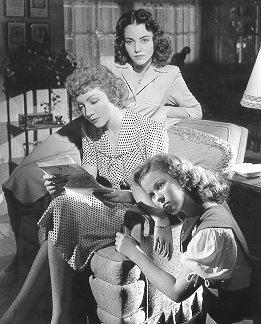
... and mine arrives tomorrow for a visit. Posting will be less frequent next week, but I will still be around. Keep the home fires burning.

The Siren Dismisses the Nanny
For the four or so people who may not have heard--Jude Law is in the international celebrity doghouse over a dalliance with his children's nanny. Some of the chat boards the Siren frequents are full of women ready to tar and feather him. You never saw such a hoo-ha in your life. "I used to think he was cute but CHEATERS AREN'T CUTE." "I HATE him now." "Stinking sack of [bleep]." "He's scum." Etc. Etc.
Out of step with the times as a matter of habit and self-protection, the Siren is having an especially hard time understanding the fuss. My moral code most emphatically does not include approval of a bit on the side. But this bit is a consenting adult, not a stepdaughter, not a 13-year-old stoned on champagne and Quaaludes. This isn't even Divine Brown.
The torrent of ire has me flummoxed. Isn't this what hotshot sex symbols DO? Isn't that why you aspire to become a hotshot sex symbol in the first place? I try to picture the late Oliver Reed performing, as Jude has, an extended public belly-crawl over a peccadillo and the synapses immediately short-circuit.
And the Siren is also puzzled about the hate spewed at the nanny. Ladies, here is living proof that you don't have to look like Sienna Miller to snag a dalliance with the likes of Jude Law. (And Ms. Miller's interviews don't suggest her erstwhile fiance was with her for the long evenings of stimulating conversation.) In terms of fantasy, shouldn't that be encouraging?
As for whether the nanny should have resisted any impulse in Mr. Law's direction; yeah, right. Look, I saw the man do a full-frontal nude scene on Broadway in Les Parents Terribles (eighth row, on the side but sightlines just fine, thank you) and suffice it to say I predicted his stardom the instant he jumped up out of the bathtub. I am a happily married Siren but if I were in my twenties, single and working at the Law household I am not sure I would hold out for the Gold Medal in Self-Restraint.
What makes an object of desire is on the movie screen and not in the New York Post. Why should it matter if Montgomery Clift preferred men? He's dead, first of all, and second of all even had we been contemporaries and he been straight it isn't as though an ordinary woman was likely to sweep him off his feet. But when I watch Red River, Monty's all mine. Libby Holman, motor accident, who cares?
Jude Law isn't mine, so I don't mind if he can't walk the line. When the camera discovers him on the beach in The Talented Mr. Ripley, that corpse of a movie wakes at last. He can get back together with Sienna, Sadie, marry the gardener, whoever, who cares.
Whether or not this remake he's filming will be a patch on the original All the King's Men--now there the Siren can summon a little passion.
Out of step with the times as a matter of habit and self-protection, the Siren is having an especially hard time understanding the fuss. My moral code most emphatically does not include approval of a bit on the side. But this bit is a consenting adult, not a stepdaughter, not a 13-year-old stoned on champagne and Quaaludes. This isn't even Divine Brown.
The torrent of ire has me flummoxed. Isn't this what hotshot sex symbols DO? Isn't that why you aspire to become a hotshot sex symbol in the first place? I try to picture the late Oliver Reed performing, as Jude has, an extended public belly-crawl over a peccadillo and the synapses immediately short-circuit.
And the Siren is also puzzled about the hate spewed at the nanny. Ladies, here is living proof that you don't have to look like Sienna Miller to snag a dalliance with the likes of Jude Law. (And Ms. Miller's interviews don't suggest her erstwhile fiance was with her for the long evenings of stimulating conversation.) In terms of fantasy, shouldn't that be encouraging?
As for whether the nanny should have resisted any impulse in Mr. Law's direction; yeah, right. Look, I saw the man do a full-frontal nude scene on Broadway in Les Parents Terribles (eighth row, on the side but sightlines just fine, thank you) and suffice it to say I predicted his stardom the instant he jumped up out of the bathtub. I am a happily married Siren but if I were in my twenties, single and working at the Law household I am not sure I would hold out for the Gold Medal in Self-Restraint.
What makes an object of desire is on the movie screen and not in the New York Post. Why should it matter if Montgomery Clift preferred men? He's dead, first of all, and second of all even had we been contemporaries and he been straight it isn't as though an ordinary woman was likely to sweep him off his feet. But when I watch Red River, Monty's all mine. Libby Holman, motor accident, who cares?
Jude Law isn't mine, so I don't mind if he can't walk the line. When the camera discovers him on the beach in The Talented Mr. Ripley, that corpse of a movie wakes at last. He can get back together with Sienna, Sadie, marry the gardener, whoever, who cares.
Whether or not this remake he's filming will be a patch on the original All the King's Men--now there the Siren can summon a little passion.
Thứ Năm, 21 tháng 7, 2005
The Siren's Compleat Anatomy of Cinematic Badness
Ignatius J. Reilly, self-styled genius of A Confederacy of Dunces, goes to the movies regularly. He does this not from love of the art, but because he wants to be appalled by them. The Siren's favorite scene (and she loves all of John Kennedy Toole's novel) comes when Ignatius settles near the front of the local movie house and notes during the credits "that several of the actors, the composer, the director, the hair designer and the assistant producer were all people whose efforts had offended him at various times in the past."
There's a little Ignatius in every serious moviegoer. That must be what has prompted me to break down my own categories of Cinematic Badness.
1. Bad, but Enjoyable.
The Naked Jungle is a nice little example of this category. An outstanding illustration, though, is The Greatest Show on Earth, deemed by general critical assent to be the Worst Best-Picture Oscar Winner of All Time. Who in the name of D.W. Griffith voted for this the year that High Noon came out?
Most movie-savvy readers of A Confederacy of Dunces assume this is the circus epic Ignatius is watching when the sight of the female star singing from her trapeze perch moves him to bellow, "Oh good heavens! ... what degenerate produced this abortion?" (That degenerate would be C.B. DeMille.) When I see Charlton Heston and Betty Hutton kiss, my mental background music is Ignatius yelling, "Oh my God, their tongues are probably all over each other's capped and rotting teeth."
2. So Bad It Achieves Its Own Sort of Artistic Merit.
And here the Siren nods to the folks over at CoolCinemaTrash.com, who have constructed a site devoted to this very category. Susan Sontag may have written the definitive essay on camp, but Cool Cinema Trash has more fun. Thanks to them, I even want to see The Revolt of Mamie Stover. I wrote in and begged them to tackle The Best of Everything (Robert Evans! Suzy Parker! those suits!) but so far they are ignoring me. Also well worth a visit is The Meeker Museum, if only for the treatises on Diane Varsi and the films of Conway Twitty.
3. Bad, but Thinks It Is Good.
By far the most provoking category, the one that makes a cinephile gnash her teeth and order a double Pernod. Se7en, for instance. Everything about this one irritates the living daylights out of me. That ridiculous typo in the middle of the title. Pointlessly murky cinematography that made me wonder if anyone in that police department could find the damn light switch, let alone a serial killer. Scene after scene of sadism all to make some trite point about apathy and the world's ugliness. Tacit endorsement of the killer's contention that his victims had it coming because one was fat, one was vain, one had sex for money, etc. And the hoariest cliche of all: the part where the killer brings out the savagery in his pursuer, because you know, we all share the beast within. I look at the IMDB Top 250 and see this in the top 50, three places above M, a serial-killer movie with more artistry in one frame than Se7en gives you in 127 minutes, and I want to storm the local Blockbuster.
4. So Bad It Is Unwatchable Even as Camp.
Think of Jean-Jacques Beineix's The Moon in the Gutter. (When I saw the two good reviews on rottentomatoes.com I thought the site had been hacked.)
5. Howling Dogs for the Ages.
Exhibit A: Showgirls.
There's a little Ignatius in every serious moviegoer. That must be what has prompted me to break down my own categories of Cinematic Badness.
1. Bad, but Enjoyable.
The Naked Jungle is a nice little example of this category. An outstanding illustration, though, is The Greatest Show on Earth, deemed by general critical assent to be the Worst Best-Picture Oscar Winner of All Time. Who in the name of D.W. Griffith voted for this the year that High Noon came out?
Most movie-savvy readers of A Confederacy of Dunces assume this is the circus epic Ignatius is watching when the sight of the female star singing from her trapeze perch moves him to bellow, "Oh good heavens! ... what degenerate produced this abortion?" (That degenerate would be C.B. DeMille.) When I see Charlton Heston and Betty Hutton kiss, my mental background music is Ignatius yelling, "Oh my God, their tongues are probably all over each other's capped and rotting teeth."
2. So Bad It Achieves Its Own Sort of Artistic Merit.
And here the Siren nods to the folks over at CoolCinemaTrash.com, who have constructed a site devoted to this very category. Susan Sontag may have written the definitive essay on camp, but Cool Cinema Trash has more fun. Thanks to them, I even want to see The Revolt of Mamie Stover. I wrote in and begged them to tackle The Best of Everything (Robert Evans! Suzy Parker! those suits!) but so far they are ignoring me. Also well worth a visit is The Meeker Museum, if only for the treatises on Diane Varsi and the films of Conway Twitty.
3. Bad, but Thinks It Is Good.
By far the most provoking category, the one that makes a cinephile gnash her teeth and order a double Pernod. Se7en, for instance. Everything about this one irritates the living daylights out of me. That ridiculous typo in the middle of the title. Pointlessly murky cinematography that made me wonder if anyone in that police department could find the damn light switch, let alone a serial killer. Scene after scene of sadism all to make some trite point about apathy and the world's ugliness. Tacit endorsement of the killer's contention that his victims had it coming because one was fat, one was vain, one had sex for money, etc. And the hoariest cliche of all: the part where the killer brings out the savagery in his pursuer, because you know, we all share the beast within. I look at the IMDB Top 250 and see this in the top 50, three places above M, a serial-killer movie with more artistry in one frame than Se7en gives you in 127 minutes, and I want to storm the local Blockbuster.
4. So Bad It Is Unwatchable Even as Camp.
Think of Jean-Jacques Beineix's The Moon in the Gutter. (When I saw the two good reviews on rottentomatoes.com I thought the site had been hacked.)
5. Howling Dogs for the Ages.
Exhibit A: Showgirls.
Thứ Hai, 18 tháng 7, 2005
Playing Favorites
100 Movies the Siren Loves
Notice, please, that I do not say these are all-time greats. Some of them are, some of them probably aren't, some definitely aren't. All I am saying is, I could watch any movie on this list again and again. I could watch one of these right now.
Les Enfants du Paradis
Rules of the Game
Fanny and Alexander
Smiles of a Summer Night
The Leopard
Night of the Hunter
My Man Godfrey
The Apartment
Sunset Boulevard
Witness for the Prosecution
One, Two, Three
Singin' in the Rain
The Third Man
The Fallen Idol
Odd Man Out
Citizen Kane
The Magnificent Ambersons
The Crowd
Rashomon
Yojimbo
The Searchers
Stagecoach
The Man Who Shot Liberty Valance
My Darling Clementine
Unforgiven
The Treasure of the Sierra Madre
Bonnie and Clyde
Imitation of Life (Sirk version)
All About Eve
A Letter to Three Wives
Red River
Sweet Smell of Success
Paths of Glory
All This, and Heaven Too
Mr. Skeffington
The Red Shoes
Black Narcissus
Thief of Baghdad (Powell-Pressburger version)
I Know Where I'm Going!
The Four Feathers (Korda version)
Footlight Parade
Yankee Doodle Dandy
Duck Soup
A Night at the Opera
Double Indemnity
The Awful Truth
Shadow of a Doubt
The Best Years of Our Lives
Roman Holiday
A Geisha
Letter from an Unknown Woman
Lola Montes
The Earrings of Madame de ...
Le Plaisir
Trouble in Paradise
The Shop Around the Corner
To Be or Not to Be (Lubitsch version)
Ninotchka
Sullivan's Travels
Viridiana
The Battle of Algiers
Giant
The Wind
Goodfellas
La Strada
The Ox-Bow Incident
Laura
A Tree Grows in Brooklyn
On the Waterfront
Libeled Lady
The Women
Dinner at Eight
A Star is Born (Judy Garland version)
The Manchurian Candidate
The Gay Divorcee
Lawrence of Arabia
The Bridge on the River Kwai
Yi-yi (A One and a Two)
The Blue Kite
The Marriage of Maria Braun
Manhattan
Annie Hall
Crimes and Misdemeanors
Modern Times
Broken Blossoms
The Bad and the Beautiful
The Band Wagon
Jules and Jim
The Last Metro
Contempt
Atlantic City
Scaramouche
Quai des Orfevres
Do the Right Thing
The Godfather, Parts 1 & 2 (is this cheating?)
Portrait of Jennie
Viaggio in Italia
Garden of the Finzi-Continis
The Court Jester
The Adventures of Robin Hood
What the Siren Has Learned From Making This List:
1. She's an old-fashioned gal.
2. She really, really needs to see some more silent movies.
3. She has never seen a Max Ophuls she didn't take to her heart. La Ronde barely missed the list.
4. She is a sucker for romance.
5. She should have made a longer list.
Some Movies That Form Gaping Holes in the Siren's Viewing History, and That She Wanted to Wait to See on a Big Screen, but Then She Had Kids and Moved to Toronto, So DVD It Probably Will Be:
La Dolce Vita (bought, but unviewed)
Day for Night (ditto)
Tokyo Story
Seventh Heaven
The Big Parade
Sunrise
Before the Revolution
The Four Horsemen of the Apocalypse (silent)
Le Cercle Rouge
Touchez Pas au Grisby
Ashes and Diamonds
Aparajito and The World of Apu
Marius/Fanny/Cesar
Senso (WHY isn't this on DVD?)
Talk to Her
The Decalogue (saw only the first one)
Six Movies That the Siren Is, in All Honesty, Highly Unlikely to See Anytime Soon Because Lately She Doesn't Want Her Heart Ripped Out of Her Chest:
Shoah
Au Hasard Balthasar
Umberto D
The Bicycle Thief
City of God
Los Olvidados
Five Movies That the Siren Just Plain Doesn't Want to See, So There:
The Fellowship of the Ring
The Two Towers
The Return of the King
Audition
Fight Club
Notice, please, that I do not say these are all-time greats. Some of them are, some of them probably aren't, some definitely aren't. All I am saying is, I could watch any movie on this list again and again. I could watch one of these right now.
Les Enfants du Paradis
Rules of the Game
Fanny and Alexander
Smiles of a Summer Night
The Leopard
Night of the Hunter
My Man Godfrey
The Apartment
Sunset Boulevard
Witness for the Prosecution
One, Two, Three
Singin' in the Rain
The Third Man
The Fallen Idol
Odd Man Out
Citizen Kane
The Magnificent Ambersons
The Crowd
Rashomon
Yojimbo
The Searchers
Stagecoach
The Man Who Shot Liberty Valance
My Darling Clementine
Unforgiven
The Treasure of the Sierra Madre
Bonnie and Clyde
Imitation of Life (Sirk version)
All About Eve
A Letter to Three Wives
Red River
Sweet Smell of Success
Paths of Glory
All This, and Heaven Too
Mr. Skeffington
The Red Shoes
Black Narcissus
Thief of Baghdad (Powell-Pressburger version)
I Know Where I'm Going!
The Four Feathers (Korda version)
Footlight Parade
Yankee Doodle Dandy
Duck Soup
A Night at the Opera
Double Indemnity
The Awful Truth
Shadow of a Doubt
The Best Years of Our Lives
Roman Holiday
A Geisha
Letter from an Unknown Woman
Lola Montes
The Earrings of Madame de ...
Le Plaisir
Trouble in Paradise
The Shop Around the Corner
To Be or Not to Be (Lubitsch version)
Ninotchka
Sullivan's Travels
Viridiana
The Battle of Algiers
Giant
The Wind
Goodfellas
La Strada
The Ox-Bow Incident
Laura
A Tree Grows in Brooklyn
On the Waterfront
Libeled Lady
The Women
Dinner at Eight
A Star is Born (Judy Garland version)
The Manchurian Candidate
The Gay Divorcee
Lawrence of Arabia
The Bridge on the River Kwai
Yi-yi (A One and a Two)
The Blue Kite
The Marriage of Maria Braun
Manhattan
Annie Hall
Crimes and Misdemeanors
Modern Times
Broken Blossoms
The Bad and the Beautiful
The Band Wagon
Jules and Jim
The Last Metro
Contempt
Atlantic City
Scaramouche
Quai des Orfevres
Do the Right Thing
The Godfather, Parts 1 & 2 (is this cheating?)
Portrait of Jennie
Viaggio in Italia
Garden of the Finzi-Continis
The Court Jester
The Adventures of Robin Hood
What the Siren Has Learned From Making This List:
1. She's an old-fashioned gal.
2. She really, really needs to see some more silent movies.
3. She has never seen a Max Ophuls she didn't take to her heart. La Ronde barely missed the list.
4. She is a sucker for romance.
5. She should have made a longer list.
Some Movies That Form Gaping Holes in the Siren's Viewing History, and That She Wanted to Wait to See on a Big Screen, but Then She Had Kids and Moved to Toronto, So DVD It Probably Will Be:
La Dolce Vita (bought, but unviewed)
Day for Night (ditto)
Tokyo Story
Seventh Heaven
The Big Parade
Sunrise
Before the Revolution
The Four Horsemen of the Apocalypse (silent)
Le Cercle Rouge
Touchez Pas au Grisby
Ashes and Diamonds
Aparajito and The World of Apu
Marius/Fanny/Cesar
Senso (WHY isn't this on DVD?)
Talk to Her
The Decalogue (saw only the first one)
Six Movies That the Siren Is, in All Honesty, Highly Unlikely to See Anytime Soon Because Lately She Doesn't Want Her Heart Ripped Out of Her Chest:
Shoah
Au Hasard Balthasar
Umberto D
The Bicycle Thief
City of God
Los Olvidados
Five Movies That the Siren Just Plain Doesn't Want to See, So There:
The Fellowship of the Ring
The Two Towers
The Return of the King
Audition
Fight Club
Get It Away From Me: The Getaway (1972)
The Siren has stumbled into a week of posts about movies she didn't care for that much, though she wouldn't call The Getaway bad. Here a bloody bank heist gets pulled off by the Cooler King, oops I mean Doc McCoy, played by Steve McQueen.
Some critics call Doc amoral. Poppycock. No matter what the movie, McQueen always has a code of ethics. Here, under the direction of Sam Peckinpah, McQueen seeks to avoid killing bank guards. He wants everyone to wear the proper safety equipment during a robbery. He behaves magnanimously toward annoying children. He will pay big for a favor (within certain limits).
The Getaway opens with a brilliant sequence on Doc's humiliating stint in prison. It isn't equalled until later, when McQueen stalks a crowded train tailing a con man who walked away with the loot from the bank. Otherwise, it's mostly bank-robber stuff like watching the guards through binoculars and the Big Pre-Heist Meeting in Some Kind of Cellar. There are lots of things exploding, odd since logic suggests an ideal getaway would be quiet. Late in the movie you get a two-people-trapped-in-a-trash-compactor scene that surely must have suggested something to George Lucas for Star Wars.
After seeing Ali MacGraw in two of her big pictures, Love Story and this one, I don't think she deserves her reputation as an all-time bad actress. She isn't nearly as bad, for example, as Daryl Hannah was on a regular basis. She's hampered by a thin, teenagerish voice that clashes with her beauty (Penelope Cruz has the same problem) but Ali is adequate to the demands this script makes on her, which are look sexy, look nervous, shut up. I suspect Peckinpah and screenwriter Walter Hill considered this pretty much all you could expect from a broad anyway.
The Getaway is an action movie; I wasn't expecting Adam's Rib. I wasn't prepared, however, for this film's devotion to what Louise Brooks called "the beloved proposition that all women are whores anyway." There's Ali, who sleeps with a repulsive Ben Johnson to get her man out of jail and gets slapped around by McQueen for her pains. After that, she threatens to split, but never does. Treat 'em mean and keep 'em keen. Will someone put that cliche out of its misery?
And any reviewer who calls this movie "gritty" or "realistic" has to be either ignoring Sally Struthers' character or harboring a bit of a grudge against women himself. Sally and her veterinarian husband are taken hostage by McQueen's wounded, double-crossing robbery accomplice (Al Lettieri). By the very next scene the wife decides she wants a piece of that big, big gun. Struthers isn't bad, exactly, but what could any actress do with this role? Getting it on with Lettieri lets the wife's nymphomaniac inner self come screeching out. What she really wanted to do instead of nursing animals was to have sex with a criminal while her husband, bound to a chair, looks on. Would even Caril Ann Fugate find this believable?
By the end, despite her admiration for the film's stylishness, energy and suspense, the Siren had a headache. Rampaging misogyny does that to her.
Some critics call Doc amoral. Poppycock. No matter what the movie, McQueen always has a code of ethics. Here, under the direction of Sam Peckinpah, McQueen seeks to avoid killing bank guards. He wants everyone to wear the proper safety equipment during a robbery. He behaves magnanimously toward annoying children. He will pay big for a favor (within certain limits).
The Getaway opens with a brilliant sequence on Doc's humiliating stint in prison. It isn't equalled until later, when McQueen stalks a crowded train tailing a con man who walked away with the loot from the bank. Otherwise, it's mostly bank-robber stuff like watching the guards through binoculars and the Big Pre-Heist Meeting in Some Kind of Cellar. There are lots of things exploding, odd since logic suggests an ideal getaway would be quiet. Late in the movie you get a two-people-trapped-in-a-trash-compactor scene that surely must have suggested something to George Lucas for Star Wars.
After seeing Ali MacGraw in two of her big pictures, Love Story and this one, I don't think she deserves her reputation as an all-time bad actress. She isn't nearly as bad, for example, as Daryl Hannah was on a regular basis. She's hampered by a thin, teenagerish voice that clashes with her beauty (Penelope Cruz has the same problem) but Ali is adequate to the demands this script makes on her, which are look sexy, look nervous, shut up. I suspect Peckinpah and screenwriter Walter Hill considered this pretty much all you could expect from a broad anyway.
The Getaway is an action movie; I wasn't expecting Adam's Rib. I wasn't prepared, however, for this film's devotion to what Louise Brooks called "the beloved proposition that all women are whores anyway." There's Ali, who sleeps with a repulsive Ben Johnson to get her man out of jail and gets slapped around by McQueen for her pains. After that, she threatens to split, but never does. Treat 'em mean and keep 'em keen. Will someone put that cliche out of its misery?
And any reviewer who calls this movie "gritty" or "realistic" has to be either ignoring Sally Struthers' character or harboring a bit of a grudge against women himself. Sally and her veterinarian husband are taken hostage by McQueen's wounded, double-crossing robbery accomplice (Al Lettieri). By the very next scene the wife decides she wants a piece of that big, big gun. Struthers isn't bad, exactly, but what could any actress do with this role? Getting it on with Lettieri lets the wife's nymphomaniac inner self come screeching out. What she really wanted to do instead of nursing animals was to have sex with a criminal while her husband, bound to a chair, looks on. Would even Caril Ann Fugate find this believable?
By the end, despite her admiration for the film's stylishness, energy and suspense, the Siren had a headache. Rampaging misogyny does that to her.
Thứ Bảy, 16 tháng 7, 2005
Turkey Trot: The Naked Jungle (1954)
Mathematicians are often huge movie buffs, did you know that? The Siren didn't, until she worked for a number of them as a secretary in the late 1980s. One professor in particular (a genius with his name on many theorems) loved to drop by and have a chat or lob a trivia question at me. He came in one day to tell me his cable company had added American Movie Classics. This was, of course, back when that was still something to celebrate. "That's great," I said, "now you have a chance to see so many old movies."
"I'll tell you what I've discovered," he said. "A lot of old movies are dreadful."
Which brings us to The Naked Jungle.
Oy. Where to start? I bought the DVD for a famous perfume scene (a minor obsession of mine) and because it had the underrated, underdiscussed (and still living) Eleanor Parker. She got an Oscar nomination for her role in Caged as an innocent corrupted by a hideous prison system, and in the classic, beloved Scaramouche she played the sultry paramour of Stewart Granger. Obviously she had splendid range, but what happened here? She seems to have confused being ladylike with ramrod posture, swishing your skirts around as much as possible and confining yourself to three facial expressions (sympathy, indignation, and startled unease, the last being used to react to both marauding ants and Charlton Heston's attempts at lovemaking).
Parker plays the mail-order bride (yeah, right) of Charlton Heston. The year is 1901, and Heston has a plantation in a vaguely Amazonian region of South America. Here he merrily mows down the rainforest and grows who knows what, whilst bringing civilization to the aboriginal inhabitants lucky enough to toil in his fields. Now, the Siren does make allowances for time period. You just have to, or you wind up watching nothing made before about 1965. But some movies are easier to allow for than others. This flick's attitude toward the natives makes Gunga Din look like Cheyenne Autumn.
Anyhow, Heston has been here making a fortune since he was 19, and what with building a big villa and taming the Naked Jungle and all, by his own account he never got around to taming any Naked Wimmin. Now, male readers, ponder this question from the Siren. You have been more than a decade in darkest South America. You scorn to make whoopee with the local women. ("They have a name for the white men who go into the villages at night," snarls Heston. He doesn't elaborate, but that must have been some name.) Finally, your lawfully wedded wife arrives, and what a dish she is, in fact, she's Eleanor Parker. She greets you in her lace-trimmed period nightie, snowy bosom heaving. At that point, you
A. Hang out the "Do Not Disturb" sign and let your newly civilized native workers take care of the farm for oh, about a month.
B. Introduce yourself politely, then proceed as above.
C. Eye her suspiciously, clench your jaw, call her "Madam" about a hundred times, interrogate her about her past, pitch a total hissy fit when you find out she's been married before, and stalk off into the night.
If you answered "C," congratulations. You're ready for that Charlton Heston film festival.
This was the part where I decided to go ahead and finish watching the thing, because obviously we had left Reality Station and things could only get funnier. I did enjoy the rest of it, though I have might have a different attitude if I hadn't bought it on sale at Amazon.
So when Heston finds out that Parker is a widow, his jaws start working more furiously than ever while he talks about the piano he had brought up the river. It's a special piano, doggone it, nobody has played it before, he was SAVING IT and he wanted his woman to be the same way. Parker puts on her indignant expression and tells him, "If you knew anything about music, you would know that the best piano is one that's been played." Having delivered the best line in the movie, she swirls those skirts around and sweeps up into the bedroom.
The next few scenes are a lot of to-ing and fro-ing betwixt Parker and Heston. Heston gets more and more hot under the collar when Parker is around, until one night he asks her what perfume she's wearing. Is it one of the ones he brought upriver for her? "It's my own," she informs him. Swirl, swirl, exit. Heston drinks some brandy, clenches (even his temples get in on the act this time), then busts open Parker's doors a la Rhett Butler. "Why don't you wear the perfume I bought you?" he yells. He grabs a bottle and dumps about half of it on Parker. IMDB informs me that this was Heston's own bit of improvisation and Parker didn't realize he was going to do it. That must be why she pulls away from his embrace in a manner far more suggestive of a woman trying to avoid someone's halitosis than one who fears she's about to be ravished.
Chuck comes to his senses and leaves. Next day he announces that Parker has to go. He plans to take her to the riverboat himself. Unfortunately, when they embark on this journey they start encountering evidence that "marabunto," or soldier ants, are on the march and headed right toward the old homestead. The local commissioner (played by a positively svelte William Conrad) tells Heston, "You're up against a monster twenty miles long and two miles wide! forty square miles of agonizing death! You can't stop it!"
Of course, what a sensible person could do is get the hell out of the way, but this is a movie, and our man Chuck abruptly shifts gears from Charlton Heston, Man of Repressed Passion, to Charlton Heston, One-Man FEMA Squad. He has to stick around, you see, for the sake of the natives. If Heston abandons them, "they'll go back to the jungle and be just as they were when I found them!" he says. Gracious, we can't have that. Why would you want to be running around a tropical paradise practising native folkways when you could be picking crops?
After this we're in standard disaster-movie mode, and the dialogue and motivations get more ridiculous, and I don't want to post spoilers but is there anyone on the planet who thinks a studio is going to let Charlton Heston get eaten by ants in the final reel? No, not even if the producers have had enough of watching him act in the dailies.
At this point in his career, Heston was supernally handsome, and the cinematography was pretty. More than anything, however, The Naked Jungle gave the Siren even more respect for the genius of William Wyler and Orson Welles. The performances they got out of Charlton Heston in The Big Country and Touch of Evil are not disappointments at all; they're miracles.
"I'll tell you what I've discovered," he said. "A lot of old movies are dreadful."
Which brings us to The Naked Jungle.
Oy. Where to start? I bought the DVD for a famous perfume scene (a minor obsession of mine) and because it had the underrated, underdiscussed (and still living) Eleanor Parker. She got an Oscar nomination for her role in Caged as an innocent corrupted by a hideous prison system, and in the classic, beloved Scaramouche she played the sultry paramour of Stewart Granger. Obviously she had splendid range, but what happened here? She seems to have confused being ladylike with ramrod posture, swishing your skirts around as much as possible and confining yourself to three facial expressions (sympathy, indignation, and startled unease, the last being used to react to both marauding ants and Charlton Heston's attempts at lovemaking).
Parker plays the mail-order bride (yeah, right) of Charlton Heston. The year is 1901, and Heston has a plantation in a vaguely Amazonian region of South America. Here he merrily mows down the rainforest and grows who knows what, whilst bringing civilization to the aboriginal inhabitants lucky enough to toil in his fields. Now, the Siren does make allowances for time period. You just have to, or you wind up watching nothing made before about 1965. But some movies are easier to allow for than others. This flick's attitude toward the natives makes Gunga Din look like Cheyenne Autumn.
Anyhow, Heston has been here making a fortune since he was 19, and what with building a big villa and taming the Naked Jungle and all, by his own account he never got around to taming any Naked Wimmin. Now, male readers, ponder this question from the Siren. You have been more than a decade in darkest South America. You scorn to make whoopee with the local women. ("They have a name for the white men who go into the villages at night," snarls Heston. He doesn't elaborate, but that must have been some name.) Finally, your lawfully wedded wife arrives, and what a dish she is, in fact, she's Eleanor Parker. She greets you in her lace-trimmed period nightie, snowy bosom heaving. At that point, you
A. Hang out the "Do Not Disturb" sign and let your newly civilized native workers take care of the farm for oh, about a month.
B. Introduce yourself politely, then proceed as above.
C. Eye her suspiciously, clench your jaw, call her "Madam" about a hundred times, interrogate her about her past, pitch a total hissy fit when you find out she's been married before, and stalk off into the night.
If you answered "C," congratulations. You're ready for that Charlton Heston film festival.
This was the part where I decided to go ahead and finish watching the thing, because obviously we had left Reality Station and things could only get funnier. I did enjoy the rest of it, though I have might have a different attitude if I hadn't bought it on sale at Amazon.
So when Heston finds out that Parker is a widow, his jaws start working more furiously than ever while he talks about the piano he had brought up the river. It's a special piano, doggone it, nobody has played it before, he was SAVING IT and he wanted his woman to be the same way. Parker puts on her indignant expression and tells him, "If you knew anything about music, you would know that the best piano is one that's been played." Having delivered the best line in the movie, she swirls those skirts around and sweeps up into the bedroom.
The next few scenes are a lot of to-ing and fro-ing betwixt Parker and Heston. Heston gets more and more hot under the collar when Parker is around, until one night he asks her what perfume she's wearing. Is it one of the ones he brought upriver for her? "It's my own," she informs him. Swirl, swirl, exit. Heston drinks some brandy, clenches (even his temples get in on the act this time), then busts open Parker's doors a la Rhett Butler. "Why don't you wear the perfume I bought you?" he yells. He grabs a bottle and dumps about half of it on Parker. IMDB informs me that this was Heston's own bit of improvisation and Parker didn't realize he was going to do it. That must be why she pulls away from his embrace in a manner far more suggestive of a woman trying to avoid someone's halitosis than one who fears she's about to be ravished.
Chuck comes to his senses and leaves. Next day he announces that Parker has to go. He plans to take her to the riverboat himself. Unfortunately, when they embark on this journey they start encountering evidence that "marabunto," or soldier ants, are on the march and headed right toward the old homestead. The local commissioner (played by a positively svelte William Conrad) tells Heston, "You're up against a monster twenty miles long and two miles wide! forty square miles of agonizing death! You can't stop it!"
Of course, what a sensible person could do is get the hell out of the way, but this is a movie, and our man Chuck abruptly shifts gears from Charlton Heston, Man of Repressed Passion, to Charlton Heston, One-Man FEMA Squad. He has to stick around, you see, for the sake of the natives. If Heston abandons them, "they'll go back to the jungle and be just as they were when I found them!" he says. Gracious, we can't have that. Why would you want to be running around a tropical paradise practising native folkways when you could be picking crops?
After this we're in standard disaster-movie mode, and the dialogue and motivations get more ridiculous, and I don't want to post spoilers but is there anyone on the planet who thinks a studio is going to let Charlton Heston get eaten by ants in the final reel? No, not even if the producers have had enough of watching him act in the dailies.
At this point in his career, Heston was supernally handsome, and the cinematography was pretty. More than anything, however, The Naked Jungle gave the Siren even more respect for the genius of William Wyler and Orson Welles. The performances they got out of Charlton Heston in The Big Country and Touch of Evil are not disappointments at all; they're miracles.
Đăng ký:
Bài đăng (Atom)