There has been a great deal of upheaval at the Siren's household, forcing her to deal with many matters mundane and neglect her patient audience. (She did manage a post here at the Cinemarati, regarding the very skewed and not-much-good WGA List of 101 Greatest Screenplays.)
The big news: The Siren's household is relocating back to New York City, Mr. C having accepted a job offer. Good news, because the Siren has been homesick for New York all along, and while she has grown quite fond of Toronto she hasn't assimilated all that well. There is a large part of my character that remains resolutely New York and pops out at inopportune moments, such as when I snapped "Lady, do we KNOW each other?" at a woman who wanted to know why my kids weren't wearing hats. Just because at least one Canadian woman found this retort hilarious doesn't mean this is the sort of response you get from someone who has moved to Toronto and is now Blending In.
The bad news is that we need to find an apartment in New York, a job more soul-sucking than getting the Augean stables in party-ready state. I was delegated to go to the city and find a place, so here I have been, dealing day after day with a unique Big Apple breed known as rental brokers. This dreadful species, rather than charging landlords for finding good tenants, as I am told they do in sane markets, in New York charges tenants about 12% to 15% of a year's rent for what amounts to unlocking the apartment door and running a credit check my toddlers could probably manage if you showed them which mouse button to click.
While I've encountered a few nice specimens, the rental-brokerage profession attracts the venal and duplicitous in droves--rather like the law, only without attorneys' frequent saving graces of intellect and mordant humor. My days I have spent in the company of brokers. At night I have retired to my friend's apartment in Park Slope (christened "the Slop" by an irreverent Siren pal), filed my nails and read political blogs to release bottled-up aggression. I venture out to buy a newspaper and find myself hating the locals who emerge from the brownstones because they have apartments and I, as yet, do not.
Understand, please, that the Siren hates conversations about real estate, and here that is what she must discuss, day after day. In New York, talk of apartments is doused in envy and surrounded by a sense of fickle chance. You might as well sit around and talk about lottery winners all evening. If, after all, there really is a hell and the Siren is sent there, by day she will have to write reports about the bond market. By night, she will be forced to discuss diets and real estate.
Some things are finally shaking loose here, and I hope to be back in Toronto packing for a move at the beginning of June. Meanwhile, I'm preparing my ballot for the Best of the Best Pictures over at Edward Copeland's place. I'll unveil it in a couple days. My chaotic life has pushed Joan Crawford to the back burner, which would probably have the lady at my throat with Jungle Red talons if she were still around. All the same, it's back to the rental counter for me, for now.
Thứ Năm, 27 tháng 4, 2006

Thứ Tư, 5 tháng 4, 2006
The Siren Plays Dominos
Ah, the joys of toddler twins, or Infectious Disease Vectors as we sometimes think of them at the House of Campaspe. Who says the Domino Theory is kaput? Last week we had a nifty demonstration of it, as first the daughter of the house, then the Siren, then the son of the house were felled by a stomach virus in neat little two-day increments. After waiting with pious patience for Mr. Campaspe to succumb, the Siren realized that this was a decidedly sexist virus. Two more days elapsed as she recovered from her pique.
She hopes that by now you have been over to Edward Copeland's place to check out the results from the Worst of the Best Picture poll. Going My Way did not make the top (bottom?) twenty. Over the weekend the Siren re-read City of Nets and was reminded, however, that her hatred for the movie gives her some august company. Billy Wilder, nominated that year for Double Indemnity, had high hopes of winning on Oscar night. When the priest movie's Leo McCarey was called to the stage as Best Director, Wilder "could not bear it...He stuck out a foot and tripped him."
Copeland incidentally has two more great pieces up, one on David Lean and another on Dog Day Afternoon. (Wonder if he has toddlers. Harrumph.) The Siren agrees with him on the Lumet, vehemently disagrees on Lean, but such is the fun of blogging. Assuming her Home Sweet Petri Dish stays healthy she may rise to Mr. Lean's defense in the near future. Copeland has also issued a challenge, as promised, to name the Best of the Best Pictures. That should be almost as much fun as the first poll. Results are due by midnight CDT on April 29. Address same as before, eddiesworst@yahoo.com. By the way--if you are wondering whether to differentiate between "best" and "favorite"--he suggests that you don't.
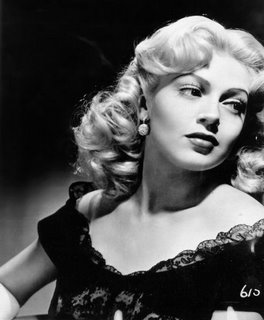 Meanwhile, Peter Nelhaus of Coffee Coffee and More Coffee has taken up the Siren's plea for another look at Lana Turner. This year, on the June 29 anniversary of her death, we're hoping to see some love for Lana. Peter is planning to tackle The Sea Chase. The Siren is having a bit of choice paralysis, as there are at least ten Lana films she could happily write about, from They Won't Forget to Portrait in Black. Maybe she'll do 'em all. We shall see.
Lastly, the Siren notes the passing of Henry Farrell, who wrote the novel Whatever Happened to Baby Jane? The bizarre 1960s trend of putting once-fabulous actresses in campy horror films just makes the Siren sad, for the most part. But Baby Jane, the first, was certainly the best and it did give the two stars a last hurrah, albeit at the expense of altering their images for all time. The Siren still prefers a much earlier Joan, and her small tribute is on its way.
She hopes that by now you have been over to Edward Copeland's place to check out the results from the Worst of the Best Picture poll. Going My Way did not make the top (bottom?) twenty. Over the weekend the Siren re-read City of Nets and was reminded, however, that her hatred for the movie gives her some august company. Billy Wilder, nominated that year for Double Indemnity, had high hopes of winning on Oscar night. When the priest movie's Leo McCarey was called to the stage as Best Director, Wilder "could not bear it...He stuck out a foot and tripped him."
Copeland incidentally has two more great pieces up, one on David Lean and another on Dog Day Afternoon. (Wonder if he has toddlers. Harrumph.) The Siren agrees with him on the Lumet, vehemently disagrees on Lean, but such is the fun of blogging. Assuming her Home Sweet Petri Dish stays healthy she may rise to Mr. Lean's defense in the near future. Copeland has also issued a challenge, as promised, to name the Best of the Best Pictures. That should be almost as much fun as the first poll. Results are due by midnight CDT on April 29. Address same as before, eddiesworst@yahoo.com. By the way--if you are wondering whether to differentiate between "best" and "favorite"--he suggests that you don't.
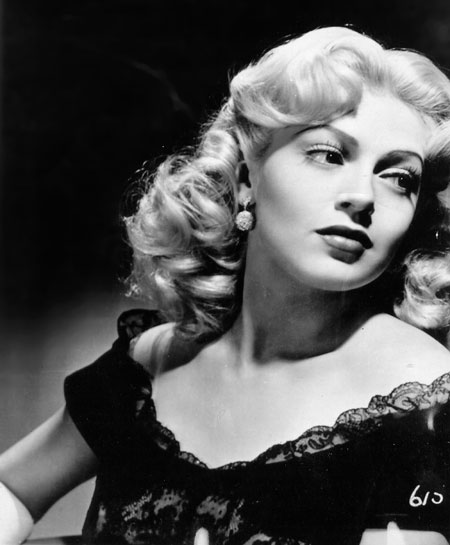 Meanwhile, Peter Nelhaus of Coffee Coffee and More Coffee has taken up the Siren's plea for another look at Lana Turner. This year, on the June 29 anniversary of her death, we're hoping to see some love for Lana. Peter is planning to tackle The Sea Chase. The Siren is having a bit of choice paralysis, as there are at least ten Lana films she could happily write about, from They Won't Forget to Portrait in Black. Maybe she'll do 'em all. We shall see.
Lastly, the Siren notes the passing of Henry Farrell, who wrote the novel Whatever Happened to Baby Jane? The bizarre 1960s trend of putting once-fabulous actresses in campy horror films just makes the Siren sad, for the most part. But Baby Jane, the first, was certainly the best and it did give the two stars a last hurrah, albeit at the expense of altering their images for all time. The Siren still prefers a much earlier Joan, and her small tribute is on its way.
Chủ Nhật, 26 tháng 3, 2006
Best Picture Oscars: The Worst of the Best
The Siren interrupts her Joan Crawford belated birthday tribute to alert her readers to a venue for venting. Blogger Edward Copeland, sensing a wee bit of disgruntlement in the film blogosphere after Crash's Oscar win, has given us an opportunity to vote for the Ten Worst Best Pictures of All Time. The intrepid Mr. Copeland is using a point system, whereby you rank your choices from Worst to 10th Worst and point values are assigned accordingly. Balloting ends March 31. Here's the list of Best Picture winners. You can send your selections to eddiesworst@yahoo.com. Naturally the Siren couldn't pass up this kind of opportunity. She's sending Mr. Copeland a plain, unadorned list, but is sharing her reasoning with her patient readers.
1. Going My Way A slobbery Great Dane cheek-lick to the Catholic clergy. Whimsical, wholesome horror. (The sequel, The Bells of Saint Mary's, is no favorite of mine either, but at least you have Ingrid Bergman adding a little sparrow-chirp of sex appeal.)
2. Rocky There is a noble American tradition of boxing movies--and this is the one that gets the Oscar?
3. Ben-Hur Not a patch on the silent version, a particularly irritating entrant in the Great Faith Demolition Derby of the 1950s, and the film some say cost Wyler any street cred with the Cahiers crowd. Stephen Boyd gives a marvelous performance, and yes, the chariot race is exciting, though let us not forget its pitiless violence and the obvious mistreatment of the animals. Otherwise, Ben-Hur is preachy, overlong and burdened with a lousy supporting cast. Haya Harareet, who courteously disappeared after this one, is the most vacuous love interest the Siren has seen in any Oscar-winning movie.
4. My Fair Lady Why does this have such a good reputation? Rex, who had been doing the part for ages at this point, stomps all over his fellow actors, so busy acting he forgets to do any reacting. Audrey, so good elsewhere, demonstrates here as in Breakfast at Tiffany's that she could no more portray a woman of the lower classes than she could fly. Nothing can dim the beauty of that incredible score, but the Siren plays her London cast recording over and over, and is never tempted to watch the movie again.
5. The Greatest Show on Earth This one, bad as it is, gives the Siren a small pang because she does enjoy it. It's most entertaining, in an Ignatius J. Reilly sort of way. Still, when she remembers C.B. DeMille's voiceovers, the ludicrous plot and Betty Hutton warbling "Come See the Circus," she has to list it.
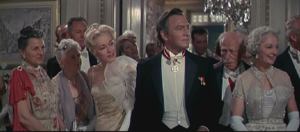
6. The Sound of Music If it weren't for the Austrian Alps, Christopher Plummer (who called it "The Sound of Mucus") and Eleanor Parker (about twenty times more appealing than Julie Andrews, though her part is too short and usually cut to ribbons for TV showings) the Siren would not be able to sit through this. When Parker, as the Baroness, silkily mentions boarding school, can you honestly say you don't wanna holler "Amen"?
7. Out of Africa Easily the most boring Oscar winner I have seen.
8. The Great Ziegfeld I know I did a generally supportive post on Luise Rainer, and she's good here. But otherwise, this is such a programmatic rags-to-riches-to-heartache biopic that even Powell and Loy can't save it.
9. Hamlet This selection may raise eyebrows, but the Siren has seen many versions of Hamlet. This one, in terms of vigor, flavor and originality, is preserved in aspic.
10. Around the World in 80 Days Wears out its welcome, despite David Niven and the wonderful scenery. Of the cameos, only Charles Boyer and Ronald Colman actually play their parts, as opposed to popping onstage to milk applause.
Notes:
Unexpectedly, in going over the Best Picture list the Siren discovered that with the exception of Going My Way, which just makes her gag, there wasn't a single winner so bad she could derive no pleasure from it. The other nine films on her list all have something enjoyable about them, even if it's just the scenery, as in Out of Africa.
The Siren has not seen Cavalcade, Tom Jones, Dances With Wolves, Braveheart, Gladiator, A Beautiful Mind, Lord of the Rings (any of 'em) or Crash. She badly wanted to list Braveheart anyway, because it's Newt Gingrich's favorite movie and during the whole Contract on America she kept hearing the House freshmen compare themselves to "the Wallace." Ethics prevailed, however (as the Newt found out, hee hee). If she hasn't seen it, the Siren didn't list it.
The Siren thinks some films unfairly get their "bad" reputations from resentment over what they defeated. How Green Was My Valley is a beautiful, poignant, well-acted film, but it will forever be despised by many for beating the obviously superior Citizen Kane. Shakespeare in Love is a contemporary example. This is a marvelous romantic comedy, with a fresh and clever script by Marc Norman and Tom Stoppard (one of the Siren's favorite playwrights). But because it beat Saving Private Ryan, people dump all over it. The Siren counters, waving her copy of A Room of One's Own, that a movie is not a masterpiece simply because it deals with war, and another movie is not automatically fluff because it deals with the feelings of women and playwrights in a drawing room. Ryan, which has a brilliant opening and some very moving sequences, is still a flawed film with an overextended third act, some muddled Philosophy of War thinking, and a closing shot so insultingly, thuddingly obvious that the picture should have been disqualified on that basis alone.
The Broadway Melody is probably going to turn up on a lot of lists, but the Siren would like to point out that as an extremely early musical it won for its novelty more than anything else. It isn't so much bad, as it is an antique. Of course, the Siren freely admits her soft spot for golddigging showgirls, and she enjoys Bessie Love and Anita Page in this movie.
Madbeast.com's Hindsight Awards, a site the Siren loves, re-reads and mentally argues with all the time, ranks Cimarron as the worst Best Picture winner of all time, citing a bloated story line and racism that was jarring even in its day. The Siren has seen Cimarron, but remembers it so dimly that she didn't feel comfortable evaluating it one way or another. Probably she was watching it for Irene Dunne and trying to ignore everything else.

1. Going My Way A slobbery Great Dane cheek-lick to the Catholic clergy. Whimsical, wholesome horror. (The sequel, The Bells of Saint Mary's, is no favorite of mine either, but at least you have Ingrid Bergman adding a little sparrow-chirp of sex appeal.)
2. Rocky There is a noble American tradition of boxing movies--and this is the one that gets the Oscar?
3. Ben-Hur Not a patch on the silent version, a particularly irritating entrant in the Great Faith Demolition Derby of the 1950s, and the film some say cost Wyler any street cred with the Cahiers crowd. Stephen Boyd gives a marvelous performance, and yes, the chariot race is exciting, though let us not forget its pitiless violence and the obvious mistreatment of the animals. Otherwise, Ben-Hur is preachy, overlong and burdened with a lousy supporting cast. Haya Harareet, who courteously disappeared after this one, is the most vacuous love interest the Siren has seen in any Oscar-winning movie.
4. My Fair Lady Why does this have such a good reputation? Rex, who had been doing the part for ages at this point, stomps all over his fellow actors, so busy acting he forgets to do any reacting. Audrey, so good elsewhere, demonstrates here as in Breakfast at Tiffany's that she could no more portray a woman of the lower classes than she could fly. Nothing can dim the beauty of that incredible score, but the Siren plays her London cast recording over and over, and is never tempted to watch the movie again.
5. The Greatest Show on Earth This one, bad as it is, gives the Siren a small pang because she does enjoy it. It's most entertaining, in an Ignatius J. Reilly sort of way. Still, when she remembers C.B. DeMille's voiceovers, the ludicrous plot and Betty Hutton warbling "Come See the Circus," she has to list it.
6. The Sound of Music If it weren't for the Austrian Alps, Christopher Plummer (who called it "The Sound of Mucus") and Eleanor Parker (about twenty times more appealing than Julie Andrews, though her part is too short and usually cut to ribbons for TV showings) the Siren would not be able to sit through this. When Parker, as the Baroness, silkily mentions boarding school, can you honestly say you don't wanna holler "Amen"?
7. Out of Africa Easily the most boring Oscar winner I have seen.
8. The Great Ziegfeld I know I did a generally supportive post on Luise Rainer, and she's good here. But otherwise, this is such a programmatic rags-to-riches-to-heartache biopic that even Powell and Loy can't save it.
9. Hamlet This selection may raise eyebrows, but the Siren has seen many versions of Hamlet. This one, in terms of vigor, flavor and originality, is preserved in aspic.
10. Around the World in 80 Days Wears out its welcome, despite David Niven and the wonderful scenery. Of the cameos, only Charles Boyer and Ronald Colman actually play their parts, as opposed to popping onstage to milk applause.
Notes:
Unexpectedly, in going over the Best Picture list the Siren discovered that with the exception of Going My Way, which just makes her gag, there wasn't a single winner so bad she could derive no pleasure from it. The other nine films on her list all have something enjoyable about them, even if it's just the scenery, as in Out of Africa.
The Siren has not seen Cavalcade, Tom Jones, Dances With Wolves, Braveheart, Gladiator, A Beautiful Mind, Lord of the Rings (any of 'em) or Crash. She badly wanted to list Braveheart anyway, because it's Newt Gingrich's favorite movie and during the whole Contract on America she kept hearing the House freshmen compare themselves to "the Wallace." Ethics prevailed, however (as the Newt found out, hee hee). If she hasn't seen it, the Siren didn't list it.
The Siren thinks some films unfairly get their "bad" reputations from resentment over what they defeated. How Green Was My Valley is a beautiful, poignant, well-acted film, but it will forever be despised by many for beating the obviously superior Citizen Kane. Shakespeare in Love is a contemporary example. This is a marvelous romantic comedy, with a fresh and clever script by Marc Norman and Tom Stoppard (one of the Siren's favorite playwrights). But because it beat Saving Private Ryan, people dump all over it. The Siren counters, waving her copy of A Room of One's Own, that a movie is not a masterpiece simply because it deals with war, and another movie is not automatically fluff because it deals with the feelings of women and playwrights in a drawing room. Ryan, which has a brilliant opening and some very moving sequences, is still a flawed film with an overextended third act, some muddled Philosophy of War thinking, and a closing shot so insultingly, thuddingly obvious that the picture should have been disqualified on that basis alone.
The Broadway Melody is probably going to turn up on a lot of lists, but the Siren would like to point out that as an extremely early musical it won for its novelty more than anything else. It isn't so much bad, as it is an antique. Of course, the Siren freely admits her soft spot for golddigging showgirls, and she enjoys Bessie Love and Anita Page in this movie.
Madbeast.com's Hindsight Awards, a site the Siren loves, re-reads and mentally argues with all the time, ranks Cimarron as the worst Best Picture winner of all time, citing a bloated story line and racism that was jarring even in its day. The Siren has seen Cimarron, but remembers it so dimly that she didn't feel comfortable evaluating it one way or another. Probably she was watching it for Irene Dunne and trying to ignore everything else.
Thứ Bảy, 25 tháng 3, 2006
In Custody: Joan Crawford
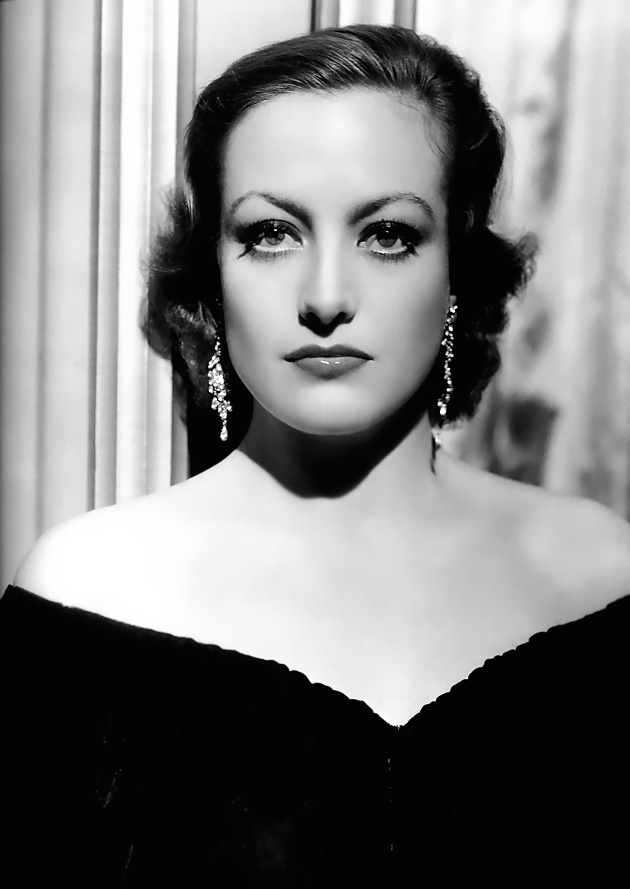 The Siren has a theory that as families age and move away from one another, their fights begin to center around who gets custody of the memories. Whose version of Thanksgiving 1988 will prevail, yours or mine?
My sister, for example, has complained for years that I always got the best Barbie furniture. And she remembers me rubbing that in quite a bit. Whereas I remember her taking my favorite Barbie (forgotten the name, but she had a handle in back so you could manipulate her torso like an hourglass-shaped Charlie McCarthy), carefully decapitating her and sticking the head in the rotisserie section of my Barbie's Magic Revolving Kitchenette. My sister and I get along quite well these days, but there are certain places where our recollections will always diverge.
Ever since 1978, there has been no question as to who got custody of the Joan Crawford memories. It is daughter Christina. She got some help from Joan herself, who took mostly lousy roles in her sunset years and plunged over the cliff of self-parody. But it is Mommie Dearest that dominates all discussion of the actress. Try having a serious film discussion about Crawford without having the words "wire hangers" crop up. On second thought, don't bother. It isn't going to happen, even if you are lucky enough to be lunching with the ladies and gentlemen at the Joan Crawford Encyclopedia or with critic Lawrence Quirk.
So let's get Faye Dunaway, hacking at the rosebushes and being mad at the dirt out of the way. Joan had four adopted children. The two oldest, Christina and Christopher, stand by their stories of life with an abusive drunk. The younger twins, Cathy and Cynthia, have always said they remember a firm but loving mother, never saw Crawford drunk and by the way, Christina is a liar. It's difficult to read about some of Christina's behavior (including an account here by Myrna Loy, scroll down) and remember that she was cut out of Crawford's will, without thinking there was some vengeful exaggeration going on. It is also hard to read accounts of Crawford with her children, including such diverse witnesses as Liz Smith and Betty Hutton, without thinking that the actress wasn't the sort you'd want as your own mother.
I guess here is where I come up with some sort of fatuity like "the truth must lie somewhere in the middle," but really, says who? I know for a fact I saw that Barbie head. Long ago, when I started seriously reading about Golden Age Hollywood, I decided to be pleasantly surprised when an actor I admire turns out to be a nice person, rather than righteously indignant when he turns out to be a schmuck. This saves me a great deal of unsightly brow-furrowing.
Once, when the Siren was on a chat board, someone asked about people who were genuinely ugly, but still movie stars. One contributor offered up Crawford's name. The Siren dashed over to Google Image counterexamples in such a frenzy that she almost disconnected her keyboard.
 That one aspect of the Mommie Dearest image really is a pity. Christina was adopted in 1940, so her account of her mother is strictly late-period Joan, of the laquered eyebrows, layered lipstick and those "goddamned shoulder pads," as Mildred Pierce director Michael Curtiz called them. Despite some dazzling bright spots--the Siren thinks anyone who loves movies must get pleasure out of Mildred Pierce, Sudden Fear and Johnny Guitar--Crawford's acting did not improve with age. For the Siren's taste, Crawford was at her best far earlier in her career, when her signature roles all had her struggling to support herself (until the last reel, which inevitably had her in mink).
Mind you, at no point in her career could one call her a subtle actress. According to David Shipman, F. Scott Fitzgerald complained that you couldn't give Crawford a script direction like "telling a lie," because you'd then get an impression of Benedict Arnold betraying West Point to the British. That doesn't mean, though, that Crawford couldn't enchant. In celebration of Joan's 101st birthday, which was March 23, the Siren's part two will discuss two of Crawford's best: as Flaemmchen in Grand Hotel, and Crystal Allen in The Women.
(The Siren urges anyone with even a peripheral interest in things Joan to scamper over to The Joan Crawford Encyclopedia, a massive labor of love and surely one of the most complete and fascinating fan sites on the Web. There is also a very fine tribute article by Gary Johnson here.)
Chủ Nhật, 19 tháng 3, 2006
More Takes on William Wyler
 The Siren is delighted to see that the comments section for her post on Dodsworth has become a little love-in for the great William Wyler. The director occupies an odd spot in the cinephile pantheon. You wouldn't call him underrated, since his filmography makes him impossible to ignore. Yet somehow he doesn't get the same quality of attention as other directors of equal or even much lesser stature. Compare the wan little entry on Wyler in Wikipedia with the Hitchcock and Spielberg entries and you start to see what I mean.
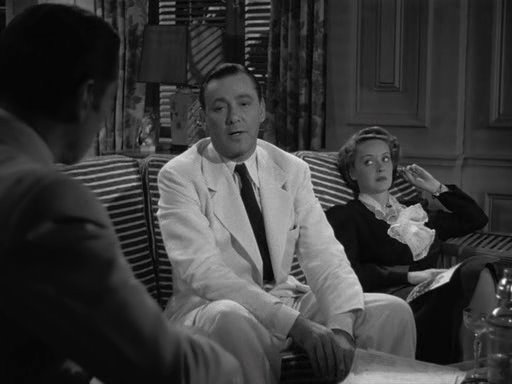 He does consistently get his due when it comes to performances. His actors knew what they had with Wyler, even if his take-after-take style left their nerves shattered. Gentle Audrey Hepburn got her head bitten off by the director on the set of Roman Holiday when she couldn't cry on camera. The astonished Hepburn burst into tears, Wyler got his take and Hepburn, of course, later got her only Oscar. Ruth Chatterton, as noted, ended by hating Wyler's guts, but she lived long enough to see Dodsworth alone of all her movies retain its fame with the general public. "I would have jumped into the Hudson River if he told me to," said Bette Davis, who fell passionately in love with her director during the filming of Jezebel. Her second film with Wyler, The Letter, is the Siren's pick for the most subtle and penetrating performance she ever gave in a career filled with great roles. (According to Whitney Stine, Davis also liked to tell how costar Herbert Marshall managed to irritate "90-Take Willie" no end by just repeating "I'd be happy to do it again, Mr. Wyler," in that sterling-silver accent of his.)
 Less frequently mentioned, but to the Siren's mind just as important, is Wyler's phenomenal ability to give his movies a sense of time and space. From the slum that abuts a luxury high-rise in Dead End, to the still, airless elegance of Washington Square in The Heiress, to an under-patronized bar in The Best Years of Our Lives, you enter the picture's world with total intensity and intimacy. So his actors aren't giving their all against a fantasy background you're either enjoying immensely or trying to ignore, as with Michael Curtiz; nor do they have to compete with an immutable set of scenic preconceptions, as they do with Hitchcock. In Wyler's best pictures--and the Siren thinks most of them are very good indeed--the players seem wholly truthful and in tune with the setting, no matter how epic or how small.
This Sunday, for her fellow Wyler lovers, the Siren is linking to two marvelous Wyler tributes. This one by David Cairns is on the indispensable Senses of Cinema site, and this one is by Josh Becker. Both men are directors, and that can't be a coincidence.
Thứ Tư, 15 tháng 3, 2006
Dodsworth (1936)

The Siren has no idea what took her so long to see Dodsworth (1936). The cinematography, by Rudolph Maté, is flawless, the sets are spectacular, the acting truthful, the script smart, William Wyler's direction ... honestly, there must be a flaw in here somewhere but it isn't coming to me at the moment. Perhaps Mary Astor's character, Edith Cortwright, a warm and beautiful widow, is a little too perfect. Otherwise, this adaptation of Sinclair Lewis's novel is a superb look at a marriage coming apart under the pressure of the wife's midlife crisis.
But the wife, in Ruth Chatterton's note-perfect performance, is shown with kindness. Fran Dodsworth's self-deception, her longing for the adventure she hasn't gotten in her long marriage to an auto tycoon, are understandable and deserve sympathy. That sympathy also testifies to the movie's greatness, because Fran is deceiving Walter Huston, who is playing surely the most lovable industrialist ever put on film. Huston had already been Dodsworth in a play version, but neither he nor the movie retain even a trace of staginess.
Sam Dodsworth's character is less easy to recognize than his wife's. In her extensive preblogging experience with business types, the Siren wishes she could tell you she met many who, after being reluctantly dragged abroad by an itchy wife, eagerly absorbed as much of the Continent's culture as possible. In fact, the Siren usually saw wealthy Americans treating Europe the same way Charles Foster Kane did--as a gigantic shopping mall. At the beginnning, Dodsworth doesn't seem to see Europe as much of anything at all, other than a means of making his wife happy. He's retired, she wants to see the world. Clearly his heart is still back in the Midwest, at the auto works he built from nothing. But early in the movie, as the Dodsworths make the transatlantic crossing, we see Sam tearing into one of the ship's dining rooms to tell his wife he can see the approach of a famous lighthouse on the English coast. He's so boyishly excited he barely notices that table mate David Niven, in Early Career Cad mode, is flirting like crazy with a willing Fran. Up they all go to the deck, and Dodsworth tries to interest his wife in the view. She says she's freezing and the damp air is ruining her hair. Dodsworth, hurt but still enthusiastic, lets his wife and her would-be paramour go below.
So from the beginning, you're shown how this trip will play out. Fran talks a good game about wanting the refinements of Europe. "Oh, you're hopeless. You haven't the mistiest notion of civilization," she snaps at her husband. Retorts Sam, "Yeah, well, maybe I don't think so much of it, though. Maybe clean hospitals, concrete highways, and no soldiers along the Canadian border come near my idea of civilization." Yet Dodsworth, not a man to putter around enthusing over cathedrals and graves, still will find much in his travels to fire his imagination. Fran will be sitting at a table in one fancy place after another, seeking reassurance from men far less worthwhile than her own husband. Your heart aches for them both--at least, at first.
Eventually you see Fran's restlessness degenerate into outright narcissism, despite her occasional better impulses, her husband's love and even a kind warning from Mary Astor, delivered when Chatterton coquettishly "admits" to being 35: "Don't." Meanwhile, Dodsworth is drawn to Astor's character, and who wouldn't be. The actress is photographed to show a classical beauty that seems to echo all the art of Europe. To Dodsworth, she comes to signify all the things another country could offer him. Astor, so memorable in shady roles, takes a potentially dull character and turns her into someone you want Dodsworth to fight for.
According to A. Scott Berg, who discusses the making of Dodsworth in his biography of its producer, Samuel Goldwyn, the depiction of Mrs. Dodsworth is due mostly to Wyler's efforts. He asked screenwriter Sidney Howard for rewrites to make the wife less selfish in the movie's early sections and to keep some sympathy for her even as things progressed. Otherwise, Wyler reasoned, the audience would despise Dodsworth for having stayed with such a harpy. Wyler fought constantly with Chatterton, who wanted to play the part as a straight-out bitch. The battles got so heated that according to David Niven, after one take too many Chatterton slapped Wyler across the face and retreated to her dressing room. Mary Astor, who seems to have been almost as insightful as Edith Cortwright, said Chatterton's character "was that of a woman is trying to hang onto her youth--which was exactly what Ruth herself was doing. It touched a nerve." No wonder the Siren found herself wincing at the harsh truth of some of Chatterton's scenes.
Despite its pedigree and glowing reviews, the movie barely earned back its costs, and then only after several revivals. Chatterton wasn't nominated for an Oscar, though Maria Ouspenskaya was, for a micropart late in the film. All four-feet-whatever of Ouspenskaya sweeps into a hotel room to tell the deluded Fran that no, she won't be able to marry her much-younger lover. Luise Rainer is famous for winning an Oscar with one scene, but Ouspenskaya appears to have gone Rainer one better by getting a nomination for one perfectly delivered line: "Have you thought how little happiness there can be, for the old wife of a young husband?"
Goldwyn always believed the movie was a financial disappointment because "it didn't have attractive people in it." (Come again, Sam? how closely did he look at Mary Astor?) But its reputation has grown over the years. Let the prickly, hard-to-please Sinclair Lewis have the final word: "I do not see how a better motion picture could have been made from both the play and the novel."
(Quotations on the making of Dodsworth are taken from A. Scott Berg's brilliant Goldwyn.)
Thứ Hai, 6 tháng 3, 2006
My Oscar Morning After
Before anyone starts moaning, I will give you one reason to be very, very happy that Crash won:
IT WAS RELEASED EARLY IN THE YEAR. *
The Siren can't be the only person who is sick to death of having a 20-car-pileup of high-quality Oscar-bait movies crowded at the end of the year, when she has social obligations competing with her ability to get the movie house. Meanwhile, for the first 11 months of the year the Siren can be found frequently staring at the movie ads, unable to fathom that her local multiplex features only a witless romantic comedy, Vin Diesel's latest stab at immortality, a big-screen version of a video game and a horror movie so violent it makes Halloween look like Lady and the Tramp.
Anyway, some other disconnnected thoughts about the Oscars, in no particular order.
To whoever decided to do actual, full scenes from the Best Picture nominees this year instead of trailers: God bless you.
To whoever decided that the way to showcase the glories of film noir is to show lots of their trailers: Are you nuts?
Some very, very odd choices for the "epic" section (Butch Cassidy? ET?) and even for the "social conscience" montage, which was probably the best of the evening.
Keanu Reeves, handsome as ever, is clearly the Robert Taylor de nos jours.
Eric Bana has ears that are terrifyingly reminiscent of Clark Gable's.
Charlize Theron seemed to be channeling Claudia Cardinale, which was a bit odd.
Keira Knightley may well be the most gorgeous woman in Hollywood right now, but it was Meryl Streep who dazzled. When you are 20 years old and a dream of beauty, you have to work at NOT looking ravishing. Meryl is pushing 60. Her gown was perfect, her makeup was perfect, she was poised and charming and most of all, she has left her glorious face alone.
What is up with the awards to Memoirs of a Geisha? The cinematography and art direction consisted of one tired cliche after another. Rain on pagoda-style roofs. Twisting streets full of those utterly fascinating Asian merchants selling utterly too-too exotic wares. Cherry blossoms, for crying out loud. I could throw a dart at Mikio Naruse's filmography and hit a better-looking movie, and he was famous for shooting quiet interiors.
Blech to the costume award to Geisha, too. Year after year it's the same thing now: The award must go to a period piece or some kind of fantasy thing. The whole premise behind that is faulty. Any actor can tell you that the way a character dresses has a huge influence on a performance. You do not move or present yourself the same way in different clothing. A costume designer can have a huge impact on a contemporary movie. Take a look at Match Point, where the outfits of each character change with their changing fortunes, mirroring what's going on with each of them. The costumes in Geisha just added to the movie's overall phoniness, with its body-conscious (?!?) kimonos and simple, chic little geisha hairdos.
One last gripe about Geisha: both the costume designer and the cinematographer talked about the courage it took to make the movie. Come again? the novel sold what, five million copies? How much courage do you need to take a huge bestseller and dumb it down even further for an American audience?
*Note: Unfortunately, now that I read Filmbrain and my fellow Cinemarati bemoaning Crash's win, I'm thinking maybe the movie wouldn't have added that much to my local multiplex. I didn't see it, so I am just trying to look on the bright side. Trying. Really trying.
IT WAS RELEASED EARLY IN THE YEAR. *
The Siren can't be the only person who is sick to death of having a 20-car-pileup of high-quality Oscar-bait movies crowded at the end of the year, when she has social obligations competing with her ability to get the movie house. Meanwhile, for the first 11 months of the year the Siren can be found frequently staring at the movie ads, unable to fathom that her local multiplex features only a witless romantic comedy, Vin Diesel's latest stab at immortality, a big-screen version of a video game and a horror movie so violent it makes Halloween look like Lady and the Tramp.
Anyway, some other disconnnected thoughts about the Oscars, in no particular order.
To whoever decided to do actual, full scenes from the Best Picture nominees this year instead of trailers: God bless you.
To whoever decided that the way to showcase the glories of film noir is to show lots of their trailers: Are you nuts?
Some very, very odd choices for the "epic" section (Butch Cassidy? ET?) and even for the "social conscience" montage, which was probably the best of the evening.
Keanu Reeves, handsome as ever, is clearly the Robert Taylor de nos jours.
Eric Bana has ears that are terrifyingly reminiscent of Clark Gable's.
Charlize Theron seemed to be channeling Claudia Cardinale, which was a bit odd.
Keira Knightley may well be the most gorgeous woman in Hollywood right now, but it was Meryl Streep who dazzled. When you are 20 years old and a dream of beauty, you have to work at NOT looking ravishing. Meryl is pushing 60. Her gown was perfect, her makeup was perfect, she was poised and charming and most of all, she has left her glorious face alone.
What is up with the awards to Memoirs of a Geisha? The cinematography and art direction consisted of one tired cliche after another. Rain on pagoda-style roofs. Twisting streets full of those utterly fascinating Asian merchants selling utterly too-too exotic wares. Cherry blossoms, for crying out loud. I could throw a dart at Mikio Naruse's filmography and hit a better-looking movie, and he was famous for shooting quiet interiors.
Blech to the costume award to Geisha, too. Year after year it's the same thing now: The award must go to a period piece or some kind of fantasy thing. The whole premise behind that is faulty. Any actor can tell you that the way a character dresses has a huge influence on a performance. You do not move or present yourself the same way in different clothing. A costume designer can have a huge impact on a contemporary movie. Take a look at Match Point, where the outfits of each character change with their changing fortunes, mirroring what's going on with each of them. The costumes in Geisha just added to the movie's overall phoniness, with its body-conscious (?!?) kimonos and simple, chic little geisha hairdos.
One last gripe about Geisha: both the costume designer and the cinematographer talked about the courage it took to make the movie. Come again? the novel sold what, five million copies? How much courage do you need to take a huge bestseller and dumb it down even further for an American audience?
*Note: Unfortunately, now that I read Filmbrain and my fellow Cinemarati bemoaning Crash's win, I'm thinking maybe the movie wouldn't have added that much to my local multiplex. I didn't see it, so I am just trying to look on the bright side. Trying. Really trying.
Đăng ký:
Bài đăng (Atom)